The MPCA has a mobile air monitoring program that allows the agency to respond faster to community air quality concerns across the state. The mobile air monitor collects data in areas where permanent monitors are not available or where the MPCA needs additional data to understand potential health risks. Traditional monitors typically take months or years to set up, whereas this mobile air monitor can mobilize quickly. MPCA staff validate all data through strict quality control and use the mobile air monitor alongside the agency’s statewide air monitoring network.
What does it measure?

The mobile monitor uses advanced technology to deliver accurate, high-quality air pollutant data that meets national best practices for mobile monitoring. The unit contains instruments that measure pollutants that can affect health and air quality.
- the mobile air monitor will measure the most common sources of air toxics emissions from facilities: trace metals, particulate matter, volatile organic compounds, and sulfur compounds
- wind and weather sensors help scientists understand where air pollutants are coming from and how they move
- MPCA scientists can add additional instrumentation if necessary
Deployment throughout the state
The MPCA can deploy the mobile air monitor to areas where short-term monitoring is necessary. It will strengthen how the state investigates air quality complaints, supports permitting work, and provides timely data.
An agency-wide team of experts will determine where to place the mobile air monitor. The team will evaluate proposed locations from technical staff and place the mobile air monitor based on factors including most urgent needs and equitable access.
Supporting environmental justice
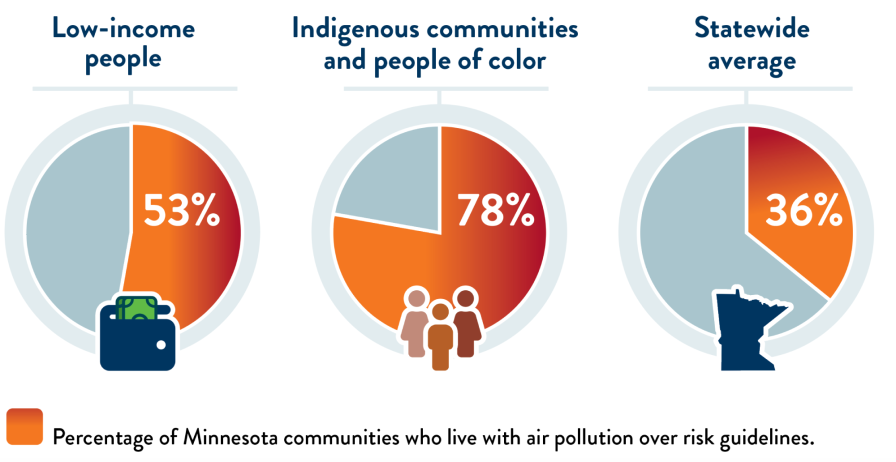
Many studies show that low-income neighborhoods and communities of color have more sources of pollution and higher potential exposures to outdoor air pollutants. In addition, the social, economic, and health inequities that these populations face can make them more vulnerable to the effects of air pollution. For instance, 36% of all communities in the state have air pollution-related risks above health guidelines. However, in low-income communities, the number is 53%. In communities of color, it’s 78%.
There are approximately 2,000 industrial facilities in Minnesota. Of those facilities, 76 have the potential to exceed air quality guidelines. About 6% of communities in Minnesota are near one or more of these facilities. However, 14% of Minnesota’s communities of color, which include Indigenous people, and 9% of Minnesota’s low-income communities are located near one or more of these facilities.
The mobile air monitor helps the MPCA more effectively monitor air quality concerns in communities disproportionately impacted by pollution because it can move into a community quickly after concerns are raised. The MPCA will share public data from the mobile monitoring unit once it is reviewed for quality assurance.
Additionally, leadership from the MPCA’s Office of Equity & Environmental Justice will help determine the mobile air monitor’s location to ensure that it supports communities that need it most. The MPCA is committed to serving Minnesotans through transparency, environmental justice, and equitable access to clean air.
If you have questions about the mobile air monitor, please email MN_MPCA_Mobile_Air_Monitoring@state.mn.us.