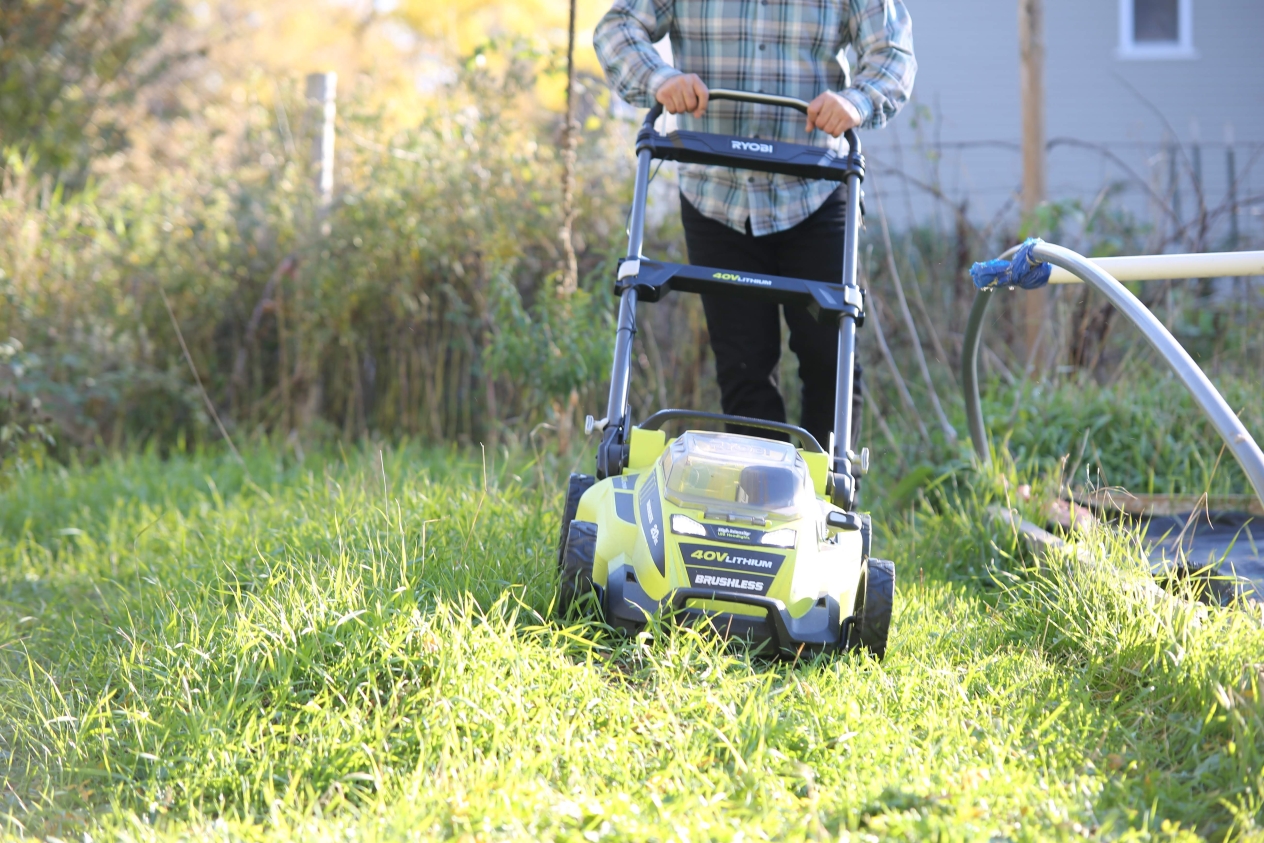
When workers at The Lawn Barber in Elysian start up their electric mowers, they appreciate more than the quiet hum. They also appreciate the extra time the crew earns back each day, the decreased fuel costs, and reduced strain on staff.
“The equipment has definitely saved us quite a bit of time compared to our older equipment,” owner Dan Gross said.
Thanks to an MPCA grant program that helped hundreds of businesses swap noisy, gas-powered tools for cleaner electric models, stories like his are becoming more common across the state. The Lawn Barber received a $1,500 grant in 2019 to buy sustainable equipment.
“One of the biggest drawbacks currently with alternative equipment is that it’s so much more money,” Gross said. “These grant programs really help businesses like mine, those that see the value.”
These positive changes really add up. From 2018 to 2021, the MPCA offered grant funding to organizations to replace gas-powered landscape equipment. The program awarded more than $452,000 to 168 businesses, nonprofits, educational institutions, and local governments. The Alternative Landscaping Equipment grant program led to an estimated 361-ton reduction per year in volatile organic compounds (VOCs), about 65% of which occurred in environmental justice areas.
“Our main focus is providing resources and assistance to small businesses to help them comply with environmental regulations,” said Clare Grilley, an environmental specialist in the MPCA’s Small Business Environmental Assistance Program. “But we also help them if they go beyond compliance, if that’s something they’re interested in, to be more sustainable.”
Why switch to electric?
Gas-powered landscaping equipment is a significant source of VOCs, chemicals that react with nitrogen oxides in sunlight to form ground-level ozone, also known as smog. Operators are directly exposed to these chemicals through long hours of equipment use.
Electric equipment is more efficient and typically requires less maintenance than gas-powered equipment. It also reduces noise levels. A gas-powered mower typically emits 85-100 decibels, while electric mowers fall in the 56-85 decibel range, depending on the model. Electric equipment also tends to weigh less because it has no engine or fuel tank. Consumer Reports estimates an electric mower pays for itself within five years.
A 2018 study by the California Air Resources Board found elevated exposures to toxic air pollutants for operators of gasoline-powered devices compared to electric. “Moving towards zero-emission technologies may help reduce operators’ exposure and their associated health risks,” the study said. Community members also are affected when landscaping equipment is routinely used in residential areas. When small businesses switch to electric, the operators are not the only ones who benefit. All members of the community are better off.
“Small businesses have been very happy to receive funding and receive equipment that has helped them save additional money,” Grilley said. “But they want to reduce emissions as well. Reducing emissions in their neighborhoods, wanting to improve air quality, the safety for their operators, it’s all part of being a good neighbor.”
Dry cleaners, convenience stores, farms, landscaping companies, and auto body shops were among the small businesses that received money from the MPCA to replace their gas-powered landscaping and snow-removal equipment with more sustainable alternatives.
How to switch
Although the Alternative Landscaping Equipment grant program has ended, the MPCA offers other grant and loan programs to help small businesses purchase equipment that meets or exceeds environmental regulations. The agency also provides direct support through its Small Business Environmental Assistance Program, which helps businesses stay in compliance and make sustainable improvements.
“If it’s independently owned and operated, fewer than 100 employees, not a major source of emissions, we’re here to help,” Grilley said. “We have a hotline that businesses can call; we do virtual or on-site visits; we have online tools to help any compliance needs. We’ll provide whatever assistance they need.”