After two years of abnormally warm winters with (well) below-average snowfall, Minnesota is looking forward to the return of snow and ice this winter. As Minnesotans reacquaint themselves with the winter chore of clearing sidewalks and driveways, the Minnesota Pollution Control Agency urges people to remember smart salting practices.
Thanks to La Niña conditions, cooler ocean temperatures that impact weather patterns, the National Oceanic and Atmospheric Administration is predicting a snowier and colder winter for the state. That will be a stark difference from the winter of 2023-2024, which was the warmest on record, and last year, when many parts of the state received only 25% to 50% of their typical snowfall.
Snow and ice have finally arrived in much of Minnesota, and that brings the winter chore of clearing pavement — sometimes with salt. But when the snow melts or it rains, salt, which contains chloride, runs into storm drains and into nearby lakes, rivers, and groundwater. Salt is commonly over-applied, sending too much chloride into our waterways and wreaking havoc for fish and other wildlife. Minnesotans can stay safe while doing their part this winter by minimizing salt use and using other tools to get the job done.
In a typical winter, we scatter approximately 404,000 tons of chloride-containing salt on our paved surfaces across Minnesota. Not only does salt damage our infrastructure and plants, but it is also harmful to our waters. When the snow melts or it rains, salt runs into storm drains and into nearby lakes, rivers, and groundwater. Salt is commonly over-applied, sending too much chloride into our waterways and wreaking havoc for fish and other wildlife. In fact, some waterways have so much chloride, they have been added to the state’s impaired waters list.
Here are some salting tips that will reduce the amount of pollution that ends up in our lakes:
- Shovel and scrape. The more snow and ice you remove, the less salt is needed to be effective. Watch this video about tools, techniques, and products that you can use to keep your driveways and sidewalks safe while protecting our waters. And make sure to take breaks and don’t overexert yourself.
- Know what you’re buying. There are no labeling requirements for deicer packaging. Beware of labeling claims such as ”environmentally friendly” or “pet friendly” because no testing of deicers has been done to prove they are safe or will work in all conditions. It is the buyer's responsibility to fully research products and make decisions accordingly, so don’t waste your money on something that won’t work.
- Temperatures below 15°F are too cold for salt. Most salts stop working at this temperature. Use sand for traction instead, but remember that sand does not melt ice.
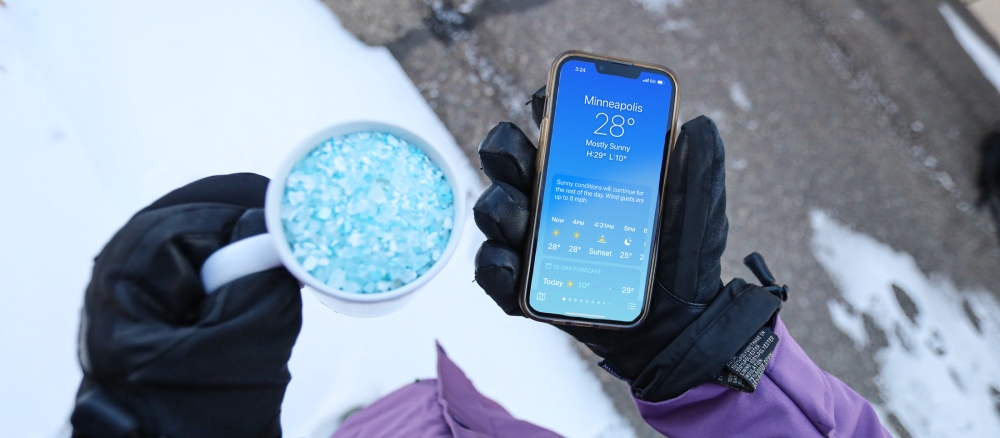
- Use the right amount. That crunch from sidewalk salt under your feet does not signify safety. People often think using more salt means more melting and safer conditions, but this is not true. Around 12 ounces — enough to fill a coffee mug — effectively treats a 20-foot driveway or 10 sidewalk squares (about 1,000 square feet). Aim to apply salt evenly and use only in critical areas. Using more than the recommended is simply a waste, costing you money.
- Sweep up visible salt on dry surfaces. Leftover salt is no longer doing any work and will just be washed away into local waters. You can keep it to reuse later, saving you money. When the correct of salt amount is used, there should not be any visible salt left behind.
- Wear proper footwear. Wear shoes or boots with good traction and pay attention to where you are walking, avoiding icy spots, if possible. Take it slow and give yourself extra time to get where you’re going.
There are many ways to provide safe winter conditions and minimize impacts to the environment. The MPCA offers Smart Salting trainings for winter maintenance professionals, property managers, and others on how to provide safe surfaces in winter and minimize harmful environmental impacts. Those who hire professionals to manage snow and ice in winter should hire a trained and certified Smart-Salting contractor. The MPCA list of certified Smart Salters can be found on the MPCA’s Smart Salting training webpage.