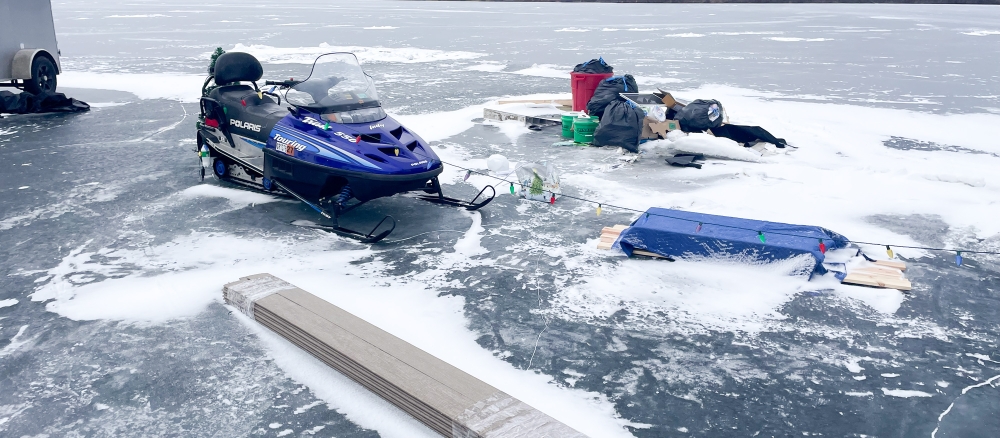
Anglers encouraged to keep it up as sport’s popularity grows
For Zach Gutknecht and others across Minnesota involved in the Keep It Clean campaign, success over the past several ice fishing seasons looked like bags of garbage and human waste piled high into lakeside dumpsters.
Gutknecht, a watershed project manager for the Minnesota Pollution Control Agency (MPCA), prefers the sight of overloaded bins to the alternative: refuse left strewn on the ice all winter and ending up polluting lake bottoms or washing up on shore after the spring thaw.
“Keep It Clean is important because it is about a collective responsibility that fosters a sense of community among anglers and outdoor users, promoting shared values and behaviors that support our lakes, rivers, and conservation efforts,” Gutknecht said. “I think there are just a few bad actors. I believe that the majority of anglers and outdoors users intend to do the right thing.”
Keep It Clean started in 2012 as a grassroots effort to raise awareness around and prevent ice garbage on Lake of the Woods, encouraging visitors with the phrase “be nice to our ice” and offering action items to help them plan ahead. It has since grown to more than 1,500 lakes overseen by a partnership of nearly 90 soil and water conservation districts, lake associations, and watershed districts across the state.
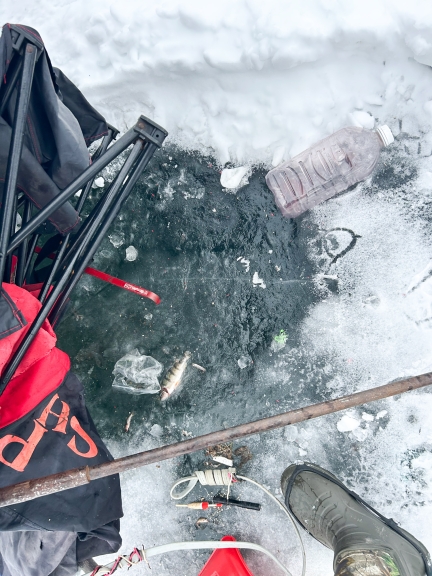
The campaign achieved a major goal in 2023 when Minnesota passed a law prohibiting leaving waste behind on frozen lakes or even letting it touch the lake. The law can be enforced with a $100 fine.
Mike Hirst, a resource conservationist with The Lake of the Woods Soil and Water Conservation District (SWCD), said that during the 2024-2025 ice fishing season, conservation officers issued 311 tickets, with 81 citations and 230 warnings statewide under the new law.
“The garbage, it has to go somewhere,” Hirst said. “If you’re out on the ice for any length of time and you have trash, you think you can throw it outside, but it’s windy, it snows, it blows, the trash is easy to lose, and that’s why the law was key.”
For example, at Upper Red Lake — one of the state’s largest and most popular ice fishing destinations — 23 tons of garbage and human waste were collected at six disposal sites in 2022 and 2023, providing tangible evidence of the program’s effectiveness.
In 2022, the MPCA and its network of partners, including the Red Lake Department of Natural Resources, Upper Red Lake Area Association, and Lake of the Woods SWCD, helped the movement expand statewide through grant money from the Clean Water Fund.
The money was used to supply lakeside dumpsters and free garbage bags as well as educational billboards and signs, video, media interviews, and informational booths at the state fair, St. Paul Ice Fishing Show, the Brainerd Jaycees Ice Fishing Extravaganza at Gull Lake, and Fishing For Ducks at Mille Lacs Lake.
It has all added up to a significant reduction in ice garbage across Minnesota lakes.
“The resorts and businesses said there’s a drastic difference in what they’re seeing. They know the program’s working. They’re all on board and joining,” Gutknecht said.
But each new ice fishing season brings renewed challenges. Upper Red Lake alone will receive an estimated 80,000 visitors during this winter’s peak three-month season. Many of those ice anglers will stay multiple nights in large wheelhouses that have modern amenities like power, comfortable seating and sleeping areas. All the garbage and waste they produce will have to go somewhere.
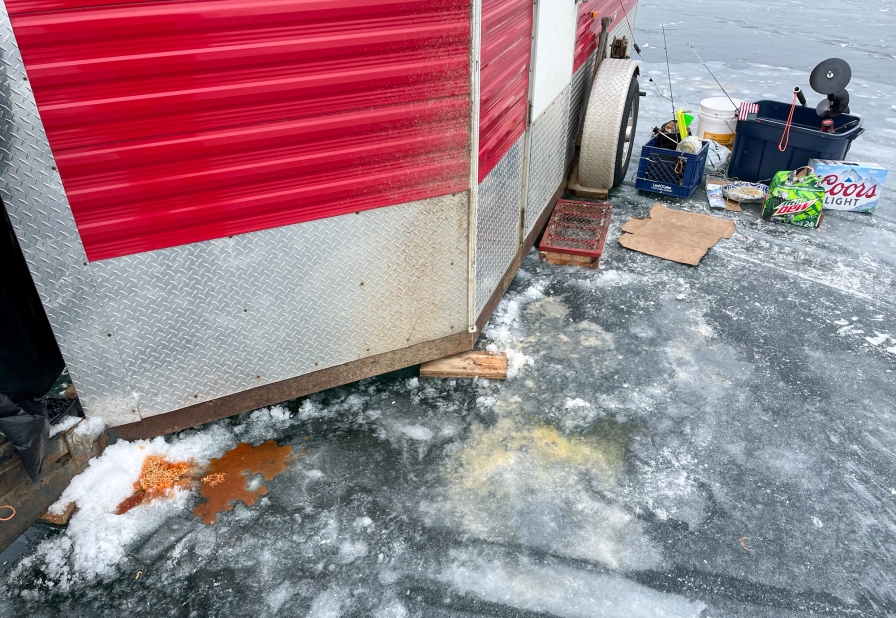
Hirst has been involved in Keep It Clean since its inception and vividly recalls a moment during opening day in May 2012 on Lake of the Woods that opened many people’s eyes to the need for regulation of ice garbage.
“People were out fishing in their boats, and there were still some patches of ice — you could see garbage and bags still frozen to the ice,” Hirst said. “A bunch of us said, ‘You can’t have that.’ It’s really cool how we started on that one lake and now so many others are doing it. It’s been a great partnership.”