Minnesota climate smart food systems (CSFS)

New RFP coming in October
A new RFP is coming for this technical assistance and planning grant, expected Oct. 9, 2026. Applicants will be required to submit their applications in SWIFT. Watch this page for updates.
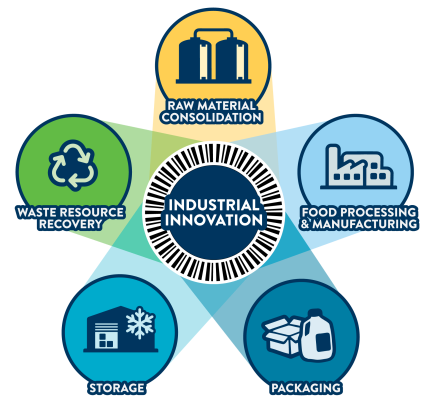
The Minnesota Pollution Control Agency’s (MPCA) industrial innovation in food systems program provides competitive grant funding to food and beverage manufacturing facilities and food system organic waste processing sites to cut climate pollution, improve efficiency, and reduce waste. Funding will help ensure that Minnesota’s food and beverage industry remains competitive, operational, and located within Minnesota.
The MPCA is solicited proposals to distribute $7.2 million in grant funding for technical assistance and planning services to food and beverage manufacturers and organic waste processors across Minnesota. Funding was designed to identify and evaluate facility-specific efficiency projects and decarbonization efforts that will, if implemented, enable the grantee to improve operational efficiency and reduce operating costs while lessening environmental impacts through reduced greenhouse gas (GHG) emissions, criteria air pollutants, hazardous air pollutants, and/or waste.
Closed: Applications for this round were due on Sept. 21, 2026. A new RFP is expected in October 2026.

Informational meeting
A new technical assistance and planning grant round will be opening soon. The MPCA will host an informational webinar on Monday, Oct. 19, 2026, from 3 to 4 p.m. The session will include a program overview, eligibility, applicable requirements, and your questions. This webinar will be recorded and made available after the event.
Eligibility
Applicant eligibility
The entity’s target facility must be in Minnesota or serve Minnesota, including Tribal lands. The following entities are eligible:
- Food and beverage manufacturing facility is a commercial or industrial facility that produces finished, packaged food or beverage products through mechanical, physical, or chemical methods using raw materials and bulk ingredients and standardized processes, specialized equipment, and controlled facility environments. These facilities typically operate continuously or in high-volume batches following strict quality, safety, and regulatory standards with the goal of producing consistent, safe, and commercially distributable products efficiently and at scale. The primary products are intended for human or animal consumption and are produced with the intention of wholesale, distribution, or retail sales.
- Food system organic waste processor can be public or private and includes but is not limited to a solid waste landfill, wastewater treatment facility, anaerobic digestion facility, or source-separated organic material (SSOM) compost facility. Dependent on their permit, these facilities may process and manage food system municipal or industrial waste. Solid waste landfills, SSOMs, and anaerobic digestion facilities typically accept and process food system materials such as wasted food, food scraps, and/or compostable food service ware products. Wastewater facilities may process food system materials such as liquid waste, biosolids, industrial byproducts, and wastewater. Anaerobic digestion facilities that process manure are also considered a food system organic waste processor.
Project eligibility
Eligible projects include but are not limited to:
- assessments, studies, or analyses on selected processes or equipment
- heat mapping
- feasibility studies
- techno-economic analyses
- piping and instrumentation diagrams
- energy assessments
- greenhouse gas inventories (Scope 1, 2, and/or 3)
- development of community engagement plans, measurement and verification plans, financial assistance plans, and permitting plans
Available funds
More information
The U.S. Environmental Protection Agency awarded Minnesota $200 million to cut climate pollution from our state’s food systems through the federal Climate Pollution Reduction Grants program. Led by the MPCA in collaboration with other state agencies, local governments, and Tribal Nations, the climate-smart food systems initiative will distribute this investment through multiple programs through September 2029.