Minnesota's transportation sector is our largest source of greenhouse gas (GHG) emissions. The MPCA is leading multiple initiatives to reduce these emissions, especially by supporting the adoption of electric vehicles.
Minnesota's clean car standards
Adopting these standards expanded consumer access to cleaner, more efficient vehicles. With cleaner air, more car options, and less money spent on gas, every Minnesotan continues to benefit from these standards.
The clean car standards consisted of the low-emission vehicle standard and the zero-emission vehicle standard and applied only to new light- and medium-duty vehicles for sale in Minnesota. The clean car standards:
- did not apply to off-road or heavy-duty vehicles or equipment like farm equipment or semi-trucks
- did not apply to existing vehicles or used vehicles for sale
- did not require emissions testing
- did not require anyone to purchase an electric vehicle (EV)
- did not affect biofuels or prevent Minnesota from supporting cleaner fuels
The low-emission vehicle (LEV) standard set limits for tailpipe pollution for auto manufacturers, meaning it required manufacturers to deliver new light- and medium-duty vehicles to the Minnesota market that produce lower emissions of greenhouse gases and other air pollutants.
The auto industry has been successfully meeting this standard since 2012 by selling LEV-certified vehicles. Because the federal emissions standard and the LEV standard were the same from 2012 until 2020, all new vehicles sold in Minnesota from 2012-2020 were LEV-certified vehicles. Current federal LEV standards are more stringent than those that Minnesota required in its clean car standards.
The zero-emission vehicle (ZEV) standard required auto manufacturers to deliver more vehicles with zero tailpipe emissions for sale in Minnesota, increasing each year.
By 2024, approximately 7% of all new light-duty vehicle sales in Minnesota were EVs, surpassing the clean car standard's goal of 6% of all new light-duty vehicle sales by the end of the 2025 model year. The total number of electric vehicles in Minnesota also grew rapidly, increasing from about 1,000 registered vehicles in 2019 to 14,800 in 2024.
Building our EV infrastructure
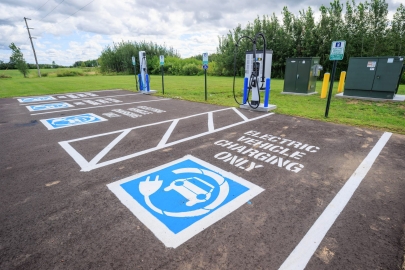
To support EV use and increase access to this cleaner technology, Minnesota needs a statewide charging network to fuel EVs — not just in the Twin Cities metro area. That’s why the MPCA is using funds from Minnesota’s share of the national Volkswagen (VW) settlement to build charging infrastructure across the state.
Minnesota will receive a total of $47 million from the national VW settlement by 2028. The MPCA is using funds from the settlement to clean up air pollution in Minnesota today and invest in a cleaner transportation system for our future.
In 2019, the MPCA awarded more than $1.4 million in grant funds to install 22 DC fast-charging stations along highway corridors in Greater Minnesota. In 2021, the agency invested an additional $2.6 million in DC fast-charging stations. This phase expanded the charging network by more than 2,500 miles, enabling EV drivers to travel longer distances throughout the state without worrying about where they can recharge. In 2026, the MPCA expects to award an additional $1.89 million in grant funds to install at least 13 more DC fast-charging stations around Minnesota. The locations were based on the Minnesota Department of Transportation's EV infrastructure needs assessment, which analyzed where DC fast chargers were needed the most in Minnesota.
Electric school bus grant program
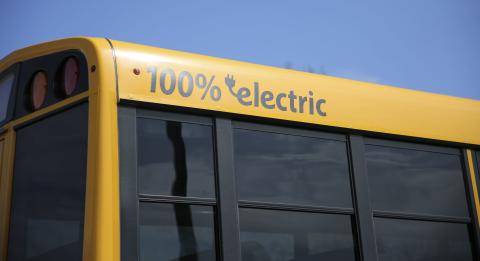
In 2020, the MPCA launched its innovative electric school bus pilot project with funding from the Volkswagen settlement. As part of this initiative, the agency provided grants to school districts across the state to replace old, diesel-powered buses with electric alternatives. In total, eight 2009 or older diesel school buses were replaced with electric versions in five school districts around the state. Switching from diesel to all-electric buses can reduce GHG emissions by at least 29 tons per vehicle. In total, the MPCA expects a reduction of 1,120 tons of GHG emissions from buses purchased using this grant.
In addition to removing older, more polluting diesel buses off the roads, the pilot project was designed to help determine the viability of electric bus technology in Minnesota’s cold climes. During the grant period, grantees provided the MPCA with quarterly data on bus operation and performance, maintenance, and energy use.
In 2023, the MPCA awarded grants that partially funded an additional seven electric school buses across three school districts. In 2025, the MPCA received $5.5 million from the U.S. Environmental Protection Agency's clean heavy duty vehicle grant for 19 electric school buses across three school districts. The MPCA used Volkswagen settlement funds to cover the matching costs so that school districts could purchase electric school buses at little to no cost to them.
Around the state, other school districts have purchased electric school buses using funds from other grant or rebate programs from the EPA and Department of Commerce. To date, 23 Minnesota school districts have received funding for 163 electric school buses.