
Regular people are pretty good at judging water quality, and new research from the Minnesota Pollution Control Agency (MPCA) proves it.
In an academic paper published in February, MPCA scientists studied 35 years of data, stretching from 1987 to 2022, from 3,337 Minnesota lakes. The data records how volunteer water monitors, MPCA samplers, and MPCA partners judge lakes by appearance, and how they judge suitability for recreation such as wading, swimming, or boating. In the new paper, the MPCA compares these observations with water-quality measurements the agency collected.
“We knew we had years — decades, really — of this observational data,” said Lee Engel, an aquatic biologist and supervisor in the MPCA’s Environmental Analysis and Outcomes Division. “The question was: What is the value of it? Does it correlate with actual water chemistry measurements like phosphorus or chlorophyll levels?”

The short answer is yes, it does. The results surprised everyone involved.
“We expected the results to be all over the place,” Engel said. “But surprisingly, the correlations were extremely strong.”
Each season, volunteers in the agency’s monitoring program fill out surveys describing how clear water looks and whether the lake seems good for recreation. Researchers found that the volunteer water monitors’ observations usually matched the scientific findings for levels of phosphorus (a nutrient that feeds algae), chlorophyll-a (a measurement of algae), and Secchi disk readings, which measure water clarity.
When too many nutrients, especially phosphorus, enter a lake, they can cause algal blooms and cloudy water. These, in turn, make the water worse for recreation. Lakes are categorized as either fully supporting recreation, as being impaired, or as having insufficient data. If a lake is impaired, it goes on the agency’s official impaired waters list. Lakes officially listed as “impaired” by the MPCA, meaning they don’t meet water quality standards for recreation, had lower survey scores than lakes that met the standards.
“Minnesota has a uniquely large data set thanks to strong investment in water quality and a robust volunteer monitoring network; it’s not something most other states have,” Engel said. “We felt it was important to share these findings, both with the broader scientific community and to highlight the value of volunteer monitoring alongside traditional scientific methods.”
Engel is one of three MPCA scientists who collaborated on the research paper, an idea that started in 2023.

Become a volunteer water monitor
Join us! Check for site availability near you and join more than 1,400 volunteers who track the health of their favorite lake or stream.
The number cruncher
Thirty-five years of data is, to put it simply, a lot. Analyzing about 2 million rows of data from eight separate data sets required an expert number cruncher. Allison Gamble, the lead author of the report, is a senior research analyst who holds a Ph.D. in aquatic ecology and specializes in large data sets. It took her a year to combine, clean, and analyze the numbers.
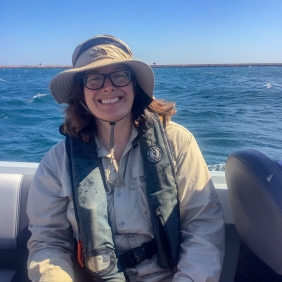
“I'm a giant nerd,” she said, laughing. “I am willing to spend an inordinate amount of time getting down to, like, why is this one date in this data set not joining with this date in this data set? I like doing that stuff.”
Gamble credited the volunteer program with giving her the building blocks she needed.
“I think people are glad to know that we're collecting information that has value, and in fact has high value, because I know that doing field work, I felt like it was an add-on to collect the physical appearance,” she said.
Gamble said the findings are a combination of quantitative data, which adds up the numbers, and qualitative data, which sums up people’s feelings.
“I would say the study was serendipitous too,” she said. “When the MPCA started collecting appearance data, it was not with any specific goal in mind. Yet we have ended up with this extensive data set that let us test people’s perceptions.”
North, south, and in between
Minnesota sets lake water-quality standards based on ecological regions (ecoregions) because lakes in different parts of the state vary in their characteristics. Minnesota’s geography is diverse, with lakes distributed based on how glaciers shaped the landscape long ago. Scientists divided the state into three ecoregions: northern lakes and forests; the central hardwood forest region, which includes Minneapolis, Saint Paul, and St. Cloud, as well as agriculture and deciduous forest; and the more agricultural southern portion of the state.
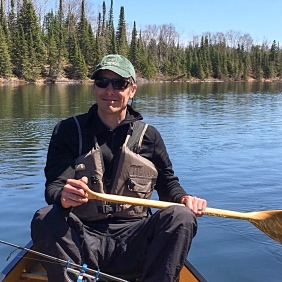
“Regardless of the region, volunteers’ reports and those from MPCA staff tended to match the formal water quality results about whether a lake is meeting standards for nutrients and algae,” said Jesse Anderson, a research scientist for the MPCA’s water quality monitoring unit and report coauthor. He’s a limnologist and hydrologist, meaning he’s an expert at the science of inland waters, and of how water moves.
Both volunteers and professional staff record observations during site visits. They assign a value of 1-5 for physical appearance and recreational suitability. A “one” means pristine, beautiful water; a “five” would be algae-covered, murky water a person wouldn’t want to touch.
“Minnesota’s water quality standards for lakes are meant to align with that same 1-to-5 scale,” Anderson said. “So seeing that the chemistry matched these observations, and that both aligned with our standards, was really powerful. It showed that these different ways of measuring water quality are reinforcing each other, not contradicting each other.”
One key takeaway is that this work reaffirms that volunteers’ simple observations are worthwhile, Engel said. While chemistry provides the most precise answers, visual assessments are the next best thing, especially in places where the MPCA can’t easily collect samples. Minnesota has thousands of lakes, including remote areas such as the boundary waters, where MPCA staff can’t regularly visit. But volunteers can, and their observations provide meaningful insight into those bodies of water.

Although the data align, one difference is that judgment differs by region. In areas of the state that usually see very little algae, people are less tolerant of it. In areas where algae are more common, people are more tolerant of it.
Looking forward to the 2026 season
Going forward, there could be ways to look at locations with 20-plus years of data and determine whether water quality changes with the seasons, or because of climate change and invasive species. The MPCA will continue to use this information to develop new water quality standards. Anderson said the team wants to look at individual lakes and see how they might be changing. If a volunteer rated a lake a one or two in the summer of 1988, are we still seeing the same thing 35 years later?
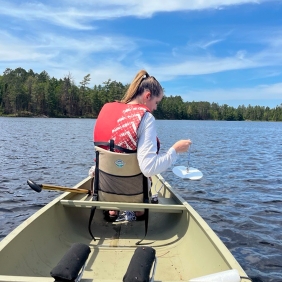
“We want to continue to validate these results and remind people to keep recording them,” Anderson said.
All of this has been good news for Waverly Reibel. As a program specialist for the Volunteer Water Monitoring Program, she works with 1,200 volunteers across Minnesota. She has people signed up in 67 of the state’s 80 major watersheds to check both lakes and streams and expressed her appreciation.
“We recognize all the time and effort, all the boat problems volunteers may have had, taking the canoe off the car and loading it into the water, walking down to the stream bank and wading in to their knees, getting a little wet and muddy — all of that,” she said.
Reibel works in an annual cycle of volunteer recruitment, water monitoring, volunteer appreciation, data analysis, and delivering the data to MPCA water- quality staff. This new research bolsters her efforts.
“This data is not just going and sitting in a repository somewhere and never being touched or looked at. This is data that’s being utilized, and it is high quality,” she said. “It really shows that people care so much about Minnesota’s waters.”

Volunteer program summary
Our volunteer water monitors collect crucial data that is indispensable to the agency. The program summary shows the impact of their work.