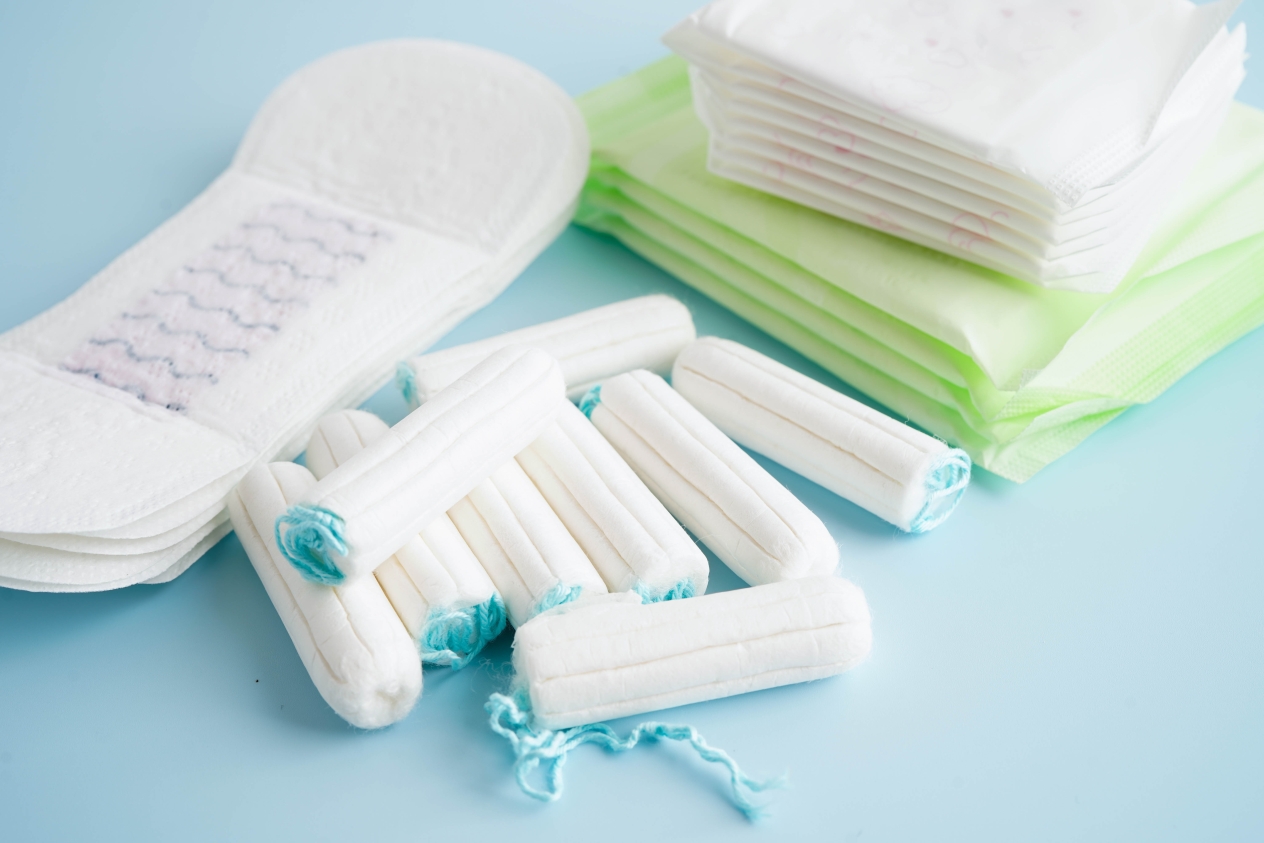
You probably wouldn't know whether the dental floss in your bathroom contains per- and polyfluoroalkyl substances (PFAS). The same is true of the tampons, pads, or other menstrual products in your home. There may be no obvious difference between a product made with these chemicals and one made without them — but the difference matters, and the Minnesota Pollution Control Agency has already noted a decrease in products containing PFAS.
“Product manufacturers in these key categories have largely transitioned to safer products, and the MPCA has confirmed it,” said Regina Small, supervisor for safer and sustainable products at the MPCA.
PFAS are persistent chemicals linked to many negative health effects and remain in the environment long after a product is manufactured, used and discarded, earning them the name “forever chemicals.”
The widespread use of PFAS in products is the root of the problem. Minnesota is prioritizing PFAS pollution prevention by requiring manufacturers to end nonessential use of the chemicals in stages by 2032 because of the health risks and extreme environmental cleanup costs. Drinking water protection measures for PFAS will cost Minnesota over $1 billion, including water treatment, investigation, and remedial actions. If contamination has to be addressed by removing and destroying PFAS from wastewater and biosolids, this would cost between $14 billion-$28 billion over 20 years in Minnesota. These expenses may be passed on to taxpayers or businesses and homeowners in their water bill.
To reduce future health risks and cleanup costs, intentionally added PFAS have been prohibited in food packaging and firefighting foam in Minnesota since 2024. In 2025, a comprehensive PFAS pollution prevention law called Amara’s Law took effect, requiring most products from 11 categories sold or distributed in Minnesota to be made without intentionally added PFAS.
Early testing shows high compliance
The MPCA purchases products to test for compliance with Minnesota’s prohibitions on PFAS, lead, and cadmium from brick-and-mortar and online stores. In this round of testing, the MPCA looked at multiple categories of products subject to the early PFAS restrictions sold in person. The results are encouraging. Nearly 93 percent of randomly purchased dental floss, menstrual products, and food packaging were found to comply with state law.
MPCA staff began the process much like secret shoppers. They went into stores and purchased products themselves, selecting different brands and rotating stores and neighborhoods to capture a range of products available to Minnesota consumers.
Food packaging was tested for PFAS before the prohibition took effect. In 2023, only 52 of 90 products, or 57.8%, did not contain elevated levels of PFAS. That number improved to 63.4% after the PFAS in food packaging prohibition took effect in 2024. By 2025, compliance jumped to 90%.
Then in 2026, 35 of 38 food-packaging products, or 92.1%, complied with Minnesota’s PFAS laws.
For the first time, testing was done on menstrual products and dental floss, new categories included in Amara’s Law.
The 46 products in those two categories were randomly selected.
Among menstrual products, 26 of 27 — or 96.3% — passed our tests. The sample included three menstrual discs or cups, nine tampons, 13 pads, and two disposable period-underwear products.
Among dental floss, 17 of 19 products — or 89.5% — were compliant.
Together, the three categories produced an overall compliance rate of 92.8%. The transition to products made without PFAS has gone largely unnoticed by consumers, yet it will benefit Minnesotans today and generations to come.
The results provide an early snapshot of how manufacturers are responding to the new restrictions — and a way for the state to identify products that may need further attention. The MPCA is following up with manufacturers of products that failed our tests.
“These test results are encouraging, especially so early in implementing Minnesota's PFAS pollution prevention laws,” Small said. “The product testing team at the MPCA is proud of our role in protecting Minnesota communities and families from ‘forever chemicals’ while setting the bar for the nation.”
Future product testing will expand to other product categories.
Preventing PFAS pollution
PFAS are a large family of chemicals that are highly persistent in the environment. PFAS released today can circulate in the environment for generations. Human exposure is a risk when they make their way into drinking water and food, among other exposure pathways.

In Minnesota, the first major discovery of PFAS contamination came in the early 2000s, when drinking water in the East Metro area of the Twin Cities was found to be contaminated. Since then, PFAS have been detected in water, sediment, soil, and fish across the state.
PFAS first emerged in the 1940s and became widely used as manufacturers recognized how effectively they could make products resist stains, repel water, and withstand heat. PFAS enabled applications ranging from nonstick cookware coatings to certain firefighting and fire-resistant products.
In 2021, Minnesota’s PFAS Blueprint recommended ending nonessential uses of PFAS. Amara Strande campaigned for such action on PFAS, and the Minnesota Legislature ultimately required the protections now known as Amara’s Law in 2023. The law passed just weeks after Strande died in April 2023 at age 20.
Minnesota’s PFAS pollution prevention laws are reducing the amount of new PFAS entering the environment by turning off the tap of nonessential uses of PFAS in products. Prohibitions on PFAS in food packaging and firefighting foam took effect in 2024. Amara’s Law went further by requiring 11 product categories be made without PFAS in order to be sold in Minnesota beginning in 2025. These categories are:
- Dental floss
- Menstrual products
- Carpets and rugs
- Cleaning products
- Cookware
- Cosmetics
- Fabric treatments
- Juvenile products
- Textile furnishings
- Ski wax
- Upholstered furniture
Final provisions of Amara‘s Law will take effect in 2032 when all other nonessential uses of PFAS in new products will be prohibited. A rulemaking process will establish details on how PFAS use in a product may be determined to be an essential, or “currently unavoidable use,” and able to continue past 2032. Phasing out all but essential uses of PFAS in new products gives manufacturers time to make changes while giving Minnesota the best possible chance to address legacy PFAS in the environment and limit risks to human health, the environment, and the economy.
PFAS pollution prevention works
The early product test results offer a promising first look at what Minnesota’s PFAS restrictions can accomplish. The work is ongoing, with Amara’s Law applying to more product categories by 2032, but the 93% compliance rate suggests that many manufactures are already adapting to the new requirements from Minnesota and other states. The impact of this is significant: Intentionally added PFAS are being kept out of the products that Minnesotans purchase and use most every day, therefore reducing potential pathways for human exposure and preventing new PFAS from entering Minnesota’s waste streams and environment.