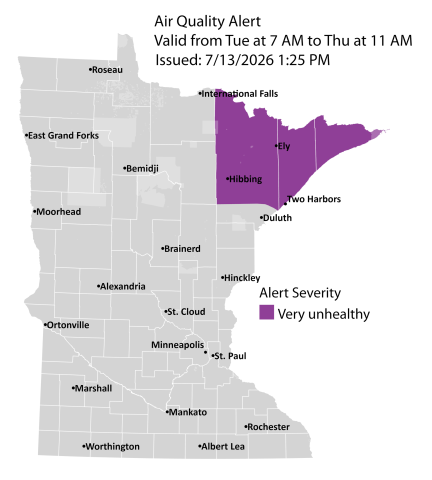
What this alert means
Air moves long distances and carries pollutants. During air quality alerts due to wildfires, the air is mixed with harmful smoke. Wildfire smoke spreads or lingers depending on the size of the fires, the wind, and the weather.
The air quality index (AQI) is color-coded. Air quality alerts are issued when the AQI is forecast to reach an unhealthy level, which includes forecasts in the orange, red, purple, and maroon categories. For a full description of each air quality category, visit airnow.gov.
Purple air quality: Very unhealthy
Sights and smells: In areas where air quality is in the purple AQI category due to wildfires, the sky will look smoky. The air will seem hazy or smoky and you won’t be able to see long distances. The air will smell strongly of smoke.
Health effects: This air is very unhealthy for everyone. Anyone could experience serious heart and lung effects such as asthma attack, heart attack, or stroke.
What to do: Avoid prolonged or vigorous outdoor activity. Consider rescheduling sports and other outdoor events or moving them inside. Sensitive individuals should avoid all outdoor physical activity.
Who is most at risk
Poor air quality impacts health. Fine particle pollution from wildfire smoke can irritate eyes, nose, and throat, and cause coughing, chest tightness, shortness of breath, dizziness, or fatigue. Smoke particles are small enough that they can be breathed deeply into lungs and enter the bloodstream. This can lead to illnesses such as bronchitis or aggravate existing chronic heart and lung diseases, triggering heart palpitations, asthma attacks, heart attacks, and strokes.
Certain groups experience health effects from unhealthy air quality sooner than others, either because they are more sensitive to fine particle pollution or because they are exposed to larger amounts of it.
Sensitive groups include:
- People who have asthma or other breathing conditions like chronic obstructive pulmonary disease (COPD).
- People who have heart disease, high blood pressure, or diabetes.
- Pregnant people.
- Children and older adults.
People with increased exposure include:
- People of all ages who do longer or more vigorous physical activity outdoors.
- People who work outdoors, especially workers who do heavy manual labor.
- People who exercise or play sports outdoors, including children.
- People who don’t have air conditioning and need to keep windows open to stay cool.
- People in housing not tight enough to keep unhealthy air out, or who do not have permanent shelter.
Anyone experiencing health effects related to poor air quality should contact their health care provider. Those with severe symptoms, chest pain, trouble breathing, or who fear they may be experiencing a heart attack or stroke should call 911 immediately.
Take precautions
Reduce or eliminate activities that contribute to air pollution, such as outdoor burning, and use of residential wood burning devices. Reduce vehicle trips and vehicle idling as much as possible.
Stay informed