Minnesota climate smart food systems (CSFS)
The MPCA had approximately $12.5 million available to decrease the amount of food being wasted across the state through projects that will prevent wasted food from being generated, prevent food from going to waste, or projects that rescue edible food from disposal and redirect it for human consumption.
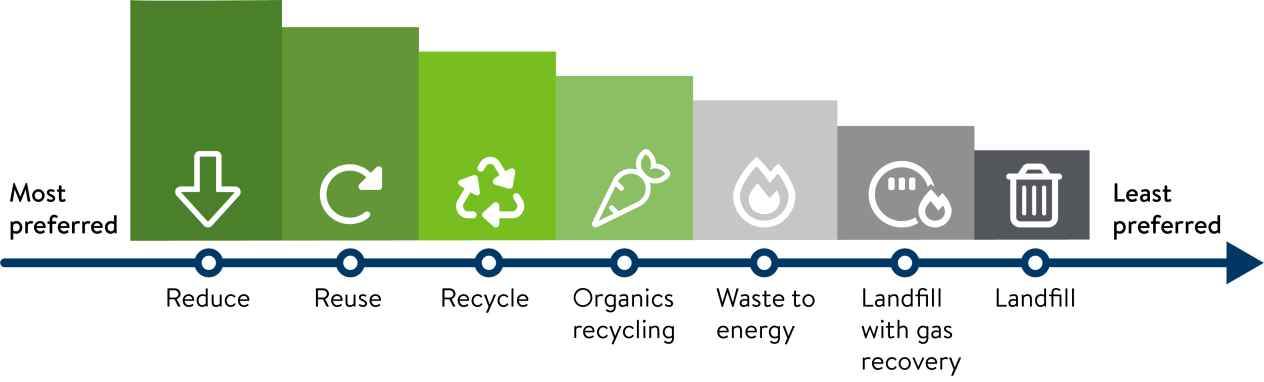
In line with the waste hierarchy, it is first preferable to prevent wasted food, followed by donating food to people. This grant supports projects that will result in an increase in the amount of wasted food that is prevented or is rescued for human consumption in Minnesota. The MPCA invites eligible applicants to submit project applications that expand existing or establish new prevention of wasted food and/or food rescue projects in Minnesota.
Closed: Application deadline was April 28, 2026
Questions and answers
Submit questions about this grant to grants.pca@state.mn.us with the subject line “MCSFS Prevention of Wasted Food and Food Rescue” no later than 4 p.m. on April 17, 2026.
MPCA employees cannot answer questions about this grant opportunity, and direct contact regarding this RFP with any MPCA personnel may result in disqualification.

Informational meeting
The MPCA held a virtual meeting on Feb. 12, 2026, to discuss this grant opportunity, the application process, and answer questions from participants.
Eligibility
Eligible organizations include entities that are serving Minnesota communities or have operations in Minnesota, such as not-for-profit and non-profit organizations, for-profit businesses, educational and other institutions, political subdivisions of the state (including counties, cities, towns, etc.), state agencies, and Tribal governments. Multi-organizational collaboration is encouraged.
Eligible projects. To be eligible for funding, project must result in an increase in the amount of wasted food that is prevented or is rescued for human consumption in Minnesota.
Examples of eligible projects include training, technical, and financial assistance programming focused on preventing wasted food or increasing food rescue, purchase of equipment or supplies to increase transportation or storage capacity to reduce food from going to waste, using software programs to identify how to reduce food from going to waste and measure its impact, projects that result in edible food being rescued and distributed to people, upcycling wasted food and food scraps into new edible products for human consumption, projects that prevent food waste on farms or aid farmers in participating in food rescue programming, education and outreach programs for staff working in areas that generate a lot of wasted food that can document the amount of food that was going to waste and is then avoided, education and outreach programs for audiences such as households, institutions, or community groups that will result in quantifiable reductions in wasted food. This not a complete list of eligible projects.
Funds may be used for programs, staffing, or equipment/supplies for prevention of wasted food and food rescue. See the RFP for more details on eligible expenses.
Available funds
Total available funds: $12.5 million. Applicants must match at least 20% of the grant request.
Large projects ($4 million):
- maximum award: $1.5 million
- minimum award: $1 million
Medium projects (approximately $4 million):
- maximum award: $999,999
- minimum award: $500,000
Small projects ($4 million):
- maximum award: $499,999
- minimum award: $75,000 (applicants requesting less than the minimum amount will be deemed ineligible)
More information
The U.S. Environmental Protection Agency awarded Minnesota $200 million to cut climate pollution from our state’s food systems through the federal Climate Pollution Reduction Grants program. Led by the MPCA in collaboration with other state agencies, local governments, and Tribal Nations, the climate-smart food systems initiative will distribute this investment through multiple programs through September 2029.
Growing, raising, processing, and delivering food uses resources such as water, land, fuel, packaging materials, and more. These processes also contribute to air pollution and greenhouse gas emissions. When food spoils or is thrown away before we eat it, the resources that went into creating the food are wasted. The food takes up space in landfills and releases greenhouse gases as it decomposes, rather than nourishing people or helping alleviate food insecurity. Across the food system, nearly one third of all food is lost or wasted as it makes its way from farms to our plates (ReFED, 2025). Preventing wasted food has positive economic, environmental, and social impact.