Minnesota climate smart food systems (CSFS)
As part of Minnesota’s Climate Smart Food Systems initiative funded by the U.S. Environmental Protection Agency, the MPCA has launched a $2 million limited-time organics management financing window under the Environmental Assistance Loan Program.
Environmental assistance (EA) loans provide financial assistance to accelerate the application and/or improvement of environmental processes and technologies in Minnesota by providing assistance for the capital costs (machinery and equipment) of eligible projects.
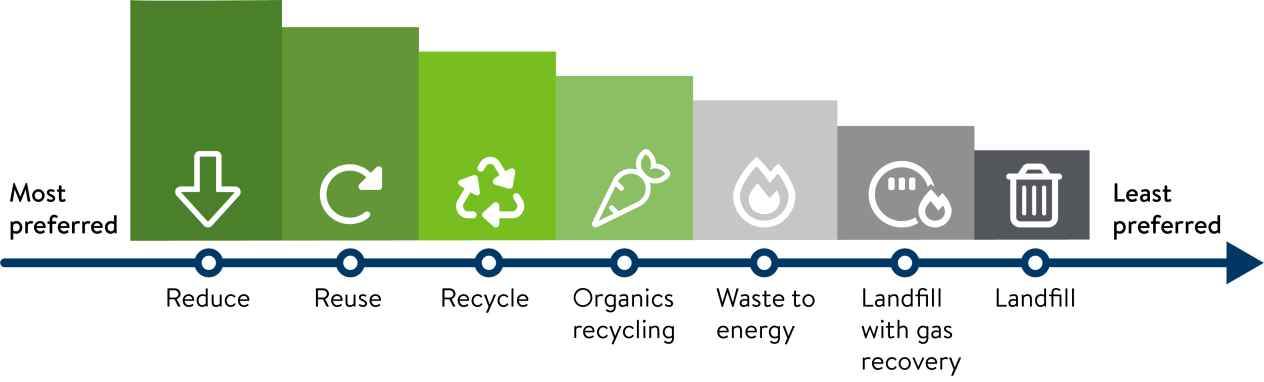
This limited-time financing window aims to prevent wasted food and reduce the amount of food and other organic materials going into landfills or being incinerated.
Eligibility
Eligible projects: organics management projects that support Minnesota’s food system, including prevention of wasted food, upcycling, food rescue for human consumption, food-to-livestock, source-separated organics composting, and anaerobic digestion
Eligible loan costs: limited to the capital costs associated with researching, developing, or implementing organics management projects or practices in Minnesota — the costs of acquisition of machinery and equipment, including taxes, freight and installation, and related leasehold improvements
Loan types: participatory and direct
- Participatory loans provide for awards from $5,000 up to a maximum loan of $750,000 at zero percent interest (contingent upon available funding in the revolving account). Participatory loan funds must be matched by a minimum dollar-for-dollar match by loans from a participating financial institution. In addition to the competitive interest rate charged by the participating financial institution on its matching funds, an administrative fee may be added to the participatory loan to defray costs associated with the servicing of the EA Loan by the financial institution.
- Direct loans provide for awards from $5,000 up to a maximum loan of $100,000 at zero percent interest. Direct loans must be matched by a minimum one dollar from the applicant for every four dollars received (25% match). Large and start-up businesses are eligible for direct loans on a case-by-case basis.
For detailed information about eligibility and other requirements, please see the request for applications and application form linked at the bottom of this page.
Available funds
Applications are accepted on an ongoing basis, though the organics management financing window will close once $2 million in loans have been issued, or by April 30, 2029 – whichever comes first.
How to apply
This Organics management financing window is a limited-time opportunity for an environmental assistance loan. Refer to the request for applications document and additional instructions below.
You must complete the pre-application, then the MPCA will reach out to inform you if you are invited to submit a full application.
Pre-application submittal requirements. All interested applicants must submit a pre-application to the MPCA in the form of an email to Grants-Loans.pca@state.mn.us with the subject line “Application to Organics Management Financing Window,” containing the following information in the body. All pre-applications sent by email will receive an email confirmation of receipt from the MPCA.
- General information
- legal name for organization/entity
- legal status for the organization/entity (e.g., LLC, corporation, nonprofit, etc.)
- business segment, if relevant (startup, small/medium, large)
- organizational/business address
- contact information (name, phone, email)
- Project information
- location of project
- type of environmental benefit (food waste prevented, rescued, collected, recycled, and/or diverted; other – please indicate; unsure – requires further discussion with MPCA)
- brief project description, including any use of innovative technologies, methods, techniques, business models (1 paragraph)
- type of organics management project supporting Minnesota’s food system (SSOM composting; upcycling; anaerobic digestion; food-to-livestock; food rescue; prevention of wasted food; other – please indicate)
- Financial information
- participatory or direct loan with either partnering financial institution name (if known) or justification for direct loan
- loan amount requested of the MPCA
- total project cost
- requested duration
- statement confirming applicant’s ability to provide the financial documentation required during the full application phase, if invited
Full application submittal requirements. If invited to submit a full application, applicants must use the provided application form. Submit applications electronically as an email attachment to Grants-Loans.pca@state.mn.us. All applications sent by email will receive an email confirmation of receipt from the MPCA.
Applicants may email for information and assistance: Grants-Loans.pca@state.mn.us
More information
The U.S. Environmental Protection Agency awarded Minnesota $200 million to cut climate pollution from our state’s food systems through the federal Climate Pollution Reduction Grants program. Led by the MPCA in collaboration with other state agencies, local governments, and Tribal Nations, the climate-smart food systems initiative will distribute this investment through multiple programs through September 2029.
Organics such as food waste and compostable products make up almost one third of the municipal waste stream in Minnesota. When food is wasted, so are the resources that go into producing it. Food waste is a significant contributor to climate change, responsible for at least 2.6 percent of all U.S. greenhouse gas emissions. That’s equivalent to the annual emissions from more than 37 million cars, or 1 in 7 cars on the road. Diverting organic material from landfills or incineration represents a significant opportunity to reduce waste and mitigate climate change.