
http://www.pca.state.mn.us

tinyURL : sbizb03 | ID : 890 Home   >   Water   >   Water Types and Programs   >   Surface Water   >   Wetlands

main content

Wetlands in Minnesota

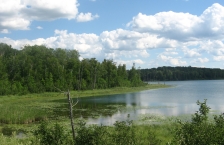
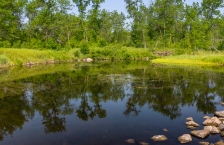
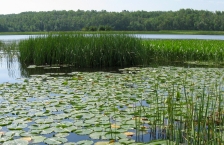
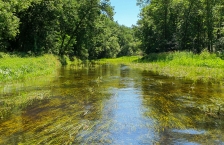
Wetlands that have received few impacts from human activities typically support a diverse community of native plant species—such as this depressional marsh located in Becker County.Wetlands that have received few impacts from human activities typically support a diverse community of native plant species—such as this depressional marsh located in Becker County.

Minnesota has an estimated 10.6 million acres of wetlands — about 19% of the state. These wetlands are home to a wide array of plants and animals and are an important part of Minnesota’s water resources. Wetlands also absorb storm flows and protect downstream water quality in lakes and streams. However, pollutants such as excess sediments and nutrients, as well as changes in hydrology, can diminish the ability of wetlands to protect water quality and support natural biological communities.

Wetlands are considered to be waters of the state and, generally, fall under the MPCA's mission to protect Minnesota's surface waters. Regulation of Minnesota's wetlands is administered by local governments and by multiple federal and state agencies, including the MPCA.

How are Minnesota's wetlands doing?

Two recent reports from the Minnesota Pollution Control Agency and the Minnesota Department of Natural Resources provide a comprehensive look at the current status of wetlands in Minnesota. Read more.

Wetland water quality standards

Minnesota water quality standards regulate project-specific physical changes to wetlands due to inundation, dredging, filling, or drainage. To protect wetlands, water temperature, pH, dissolved oxygen, hardness, and chlorides may need to be maintained at background conditions. For more information:

Protecting wetland water quality

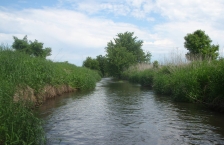
Hybrid Cattail (a nonnative-invasive species) dominates this depressional marsh in Brown County. Changes in hydrology, excess nutrient loading, and/or direct physical alterations can lead towards replacement of native plant species by more tolerant nonnatives in wetlands.Hybrid Cattail (a nonnative-invasive species) dominates this depressional marsh in Brown County. Changes in hydrology, excess nutrient loading, and/or direct physical alterations can lead towards replacement of native plant species by more tolerant nonnatives in wetlands.

401 Water Quality Certification

The federal Clean Water Act (CWA) requires that anyone who conducts activities involving dredge and fill of waters of the U.S. must obtain from the state a Section 401 water quality certification to ensure the project will comply with state water quality standards. The majority of 401 activities are regulated under general CWA Section 404 permits from the U.S. Army Corps of Engineers and are pre-certified or waived. However, projects of large scope or direct impact to outstanding resource value waters may warrant a project specific 401 certification.

More information: Clean Water Act Section 401 Water Quality Certifications

Stormwater Program

Unmanaged stormwater can negatively impact surface waters, including wetlands. The MPCA administers the Stormwater Program primarily under three general stormwater permits: Municipal (MS4), industrial, and construction stormwater. Stormwater regulations and management practices in Minnesota that pertain to wetlands can be found on the Stormwater Program page.
Wetland monitoring and assessment

A mature canopy of Tamarack trees in a Beltrami County coniferous swamp. The majority of Minnesota’s wetlands–including forested swamps–occur on saturated soils and have standing water only seasonally or following major rain events.A mature canopy of Tamarack trees in a Beltrami County coniferous swamp. The majority of Minnesota’s wetlands–including forested swamps–occur on saturated soils and have standing water only seasonally or following major rain events.

The MPCA has developed methods and criteria to assess wetland quality — primarily based on invertebrate and vegetation community responses to human impacts. The goals of this effort are to monitor the status and trends of wetland quality to help protect and restore the integrity of Minnesota's wetlands by providing scientifically valid information to make informed management decisions. More information on wetland monitoring at the MPCA can be found on the wetland monitoring and assessment page.

Wetland Program Planning

The MPCA, in conjunction with other state and federal agencies, periodically engages in wetland program planning activities. These activities provide a platform to more systematically gauge effectiveness and determine priorities.

Minnesota Wetland Program Plan

A Wetland Program Plan has recently been completed by Minnesota natural resource agencies. The plan was developed in response to a request by the U.S. Environmental Protection Agency for states to document progress and propose priority work towards building capacity to meet the U.S. EPA wetland program core elements:

  • Monitoring and assessment
  • Regulatory activities including 401 certification
  • Voluntary restoration and protection
  • Water quality standards for wetlands

The Minnesota Wetland Program Plan promotes new and enhanced interagency cooperation to improve wetland management on a variety of fronts.

Monitoring strategy

A multi-agency effort to develop a framework to determine whether Minnesota is meeting the no net loss policy goal was completed in 2006. The overall goal of the PDF Document state wetland monitoring strategy (wq-bwm6-03) was to develop a broadly understood and scientifically sound approach for monitoring and assessing the status and trends of wetland quantity and quality statewide. A number of activities have been initiated to meet CWAMMS recommendations including:

Related wetland links

In the news

HTML Content Scientists check health of state's wetlands (MPR) External Link

For more information

Mark Gernes, MPCA, 651-757-2387

Last modified on February 11, 2013 10:20