Blue Earth River
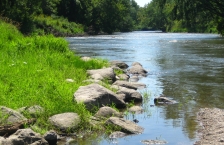
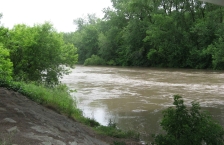
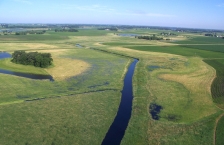
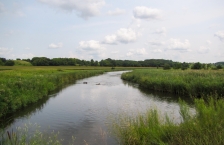
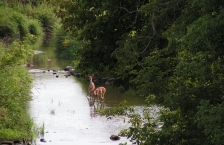
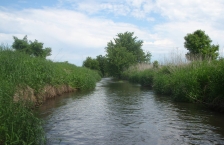
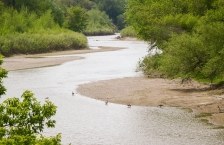
The Blue Earth River begins in northern Iowa and meets with the West Branch Blue Earth River in Faribault County. The watershed includes parts of eight counties in southern Minnesota and four in northern Iowa.
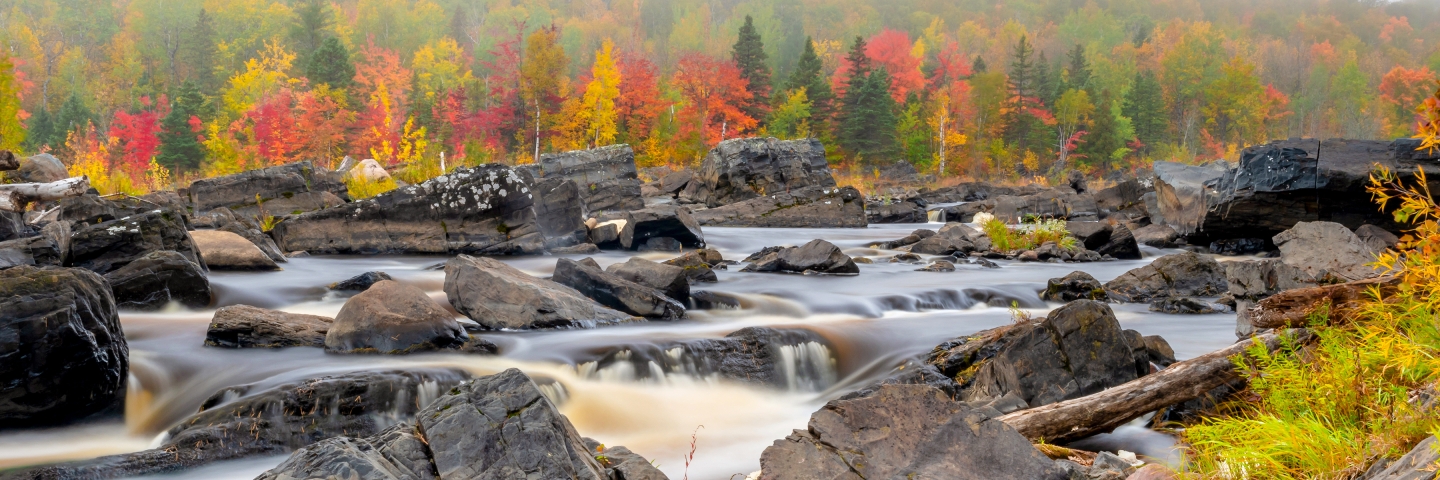
The Blue Earth River begins in northern Iowa and meets with the West Branch Blue Earth River in Faribault County. The watershed includes parts of eight counties in southern Minnesota and four in northern Iowa.
The Chippewa River Watershed covers 2,085 square miles and drains portions of eight counties in west central Minnesota.
The Cottonwood River is located in southwestern Minnesota in the counties of Brown, Cottonwood, Lyon, Murray, and Redwood. It begins near Balaton in southwest Lyon County.
The Lac qui Parle Watershed covers approximately 1,100 square miles and drains parts of Lac qui Parle, Lincoln, and Yellow Medicine counties in Minnesota as well as parts of Grant, Deuel, and Brookings counties in South Dakota.
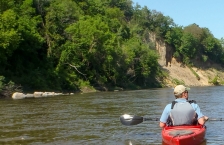
Located in south-central Minnesota, the Le Sueur River flows 111 miles through a gently rolling landscape, most of it farmland, until it cuts down through high bluffs to the Blue Earth River.
The Lower Minnesota River Watershed includes the lowest reach of the Minnesota River and flows into the Mississippi at Fort Snelling. The second-largest watershed in the Minnesota River Basin, it covers 1,760 square miles, divided by the Minnesota River itself.
The Minnesota River - Headwaters Watershed covers 487,015 acres in the Prairie Parkland ecoregion of southwestern Minnesota. Portions of Traverse, Big Stone, Swift, Lac qui Parle, Stevens, and Chippewa counties drain the watershed.
The Minnesota River - Mankato Watershed covers 861,886 acres across Cottonwood, Brown, Redwood, Renville, Sibley, Nicollet, Blue Earth, and Le Sueur counties in south-central Minnesota.
The Minnesota River - Yellow Medicine River Watershed (1.3 million acres) has traditionally been managed as two separate watersheds, the Hawk Creek Watershed to the north of the Minnesota River and the Yellow Medicine River Watershed to the south.
The Pomme de Terre River begins cool and clear in Otter Tail County, bordered by wooded hills and grassy meadows. It flows south through several lakes; as the river nears its mouth, it is bordered by eroding banks, becoming increasingly muddy before discharging into the Minnesota River at Marsh Lake.
The Redwood River is located in southwestern Minnesota in the counties of Lincoln, Lyon, Murray, Pipestone, Redwood, and Yellow Medicine.
One of 12 major watersheds of the Minnesota River Basin, the Watonwan River Watershed covers 878 square miles in south-central Minnesota.