Minnesota Pollution Control Agency Logo  Minnesota Pollution Control Agency
 
Skip navigation   Home   |  Site Index   |  Glossary  |  What's New  |  Ask MPCA   |   Visitor Center  
  

Steps to Compliance

Forms and Fact Sheets

Industrial Stormwater Permit and Program Development

Program Contacts

Related Pages:

Stormwater Program

Fishing at a Minnesota Lake

This Web site contains PDF documents that require Adobe Acrobat for viewing.

Industrial Stormwater


Stormwater Program for Industrial Activity


Steps to Compliance - How to comply with the future requirements of the Industrial Stormwater permit.

Quick Links:

Program Contacts

Updates: Subscribe to the Industrial Stormwater Information Updates E-mail List to receive periodic e-mails specifically about the MPCA's Industrial Stormwater Program.

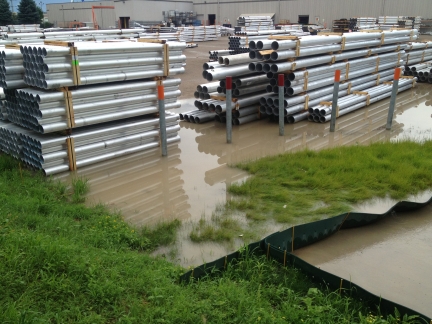
The goal of the Industrial Stormwater Program is to reduce the amount of pollution that enters surface and ground water from industrial facilities in the form of stormwater runoff. This goal is accomplished through developing an effective Stormwater Pollution Prevention Plan (SWPPP) which contains your Stormwater Control Measures, described as Best Management Practices (BMPs).  Regulated Parties manage stormwater runoff by meeting the permit requirements or by certifying a condition of No Exposure.

Program Update – February 2010

  • DRAFT Timeline for permit issuance:
    • Public Notice permit for comment: July 6-September 4, 2009
    • Present findings to Citizens’ Board, request approval of permit: February 23, 2010
    • Finalize permit: March 1, 2010
    • Begin receiving applications: soon after finalizing permit

DRAFT Phased Application Groups:

Sector Group 1

Within 60 days of permit effective date

Sector Group 2

Within 120 days of permit effective date

Sector Group 3

Within 180 days of permit effective date

Sectors:  A, C, D, E, F, G, I, J, L, M, N, Q, Y, and AA

Sectors:  H, K, O, P, R, S, Z, and AC

Sectors:  B, T, U, V, W, X, and AB

  • The public comment period for the draft Industrial Stormwater Multi-Sector General Permit has ended. The comment period is over and program staff are now reviewing, processing and responding to comments.  Check back here for updates. Note to Permittees:  The permit document below is the entire draft Multi-Sector General Permit.  Most Permittees will receive only the relevant portions of the final permit, which should total around 80 pages (36 pages for permit requirements, 2-10 pages for their specific sector requirements, and 39 pages of Appendices).

Steps to Industrial Stormwater Compliance

Step 1

Identify your facility — do you need a permit? (Pre-application)
Learn about the proposed permit requirements! Do you need a permit? Learn about who is required to apply for the Industrial Stormwater Permit.

Updated 1/10
New
Step 2 Consider certifying for No Exposure and other pollution prevention opportunities (Pre-application)
Are you required to have an Industrial Stormwater permit but have all significant materials indoors or under cover? Learn how you can apply for the No Exposure Exclusion, a 5-year exemption from permit requirements.  Also, learn about other Pollution Prevention opportunities that may save you both time and money while helping the environment.
Updated 10/09
New
Step 3 Assess for pollutants, sources of contaminated stormwater (Pre-application)
This step will provide helpful information about general pollutants to assess at your facility, now that you know you need a permit. This step also provides future sector-specific pollutant requirements.
Updated 8/09
Step 4 Gather application materials before applying (Pre-application)
There are a number of things you need to have before applying for the permit (such as latitude/longitude information, what bodies of water your facility is near, facility contact information, etc). This step will give you an understanding about what materials you should have ready BEFORE applying for the permit.
Updated 6/09
Step 5 Create Stormwater Pollution Prevention Plan (SWPPP), choose Best Management Practices (BMPs) (Pre-application)
The heart of the Industrial Stormwater Permit is the Stormwater Pollution Prevention Plan and the Best Management Practices you implement at your facility. This step will guide you to the SWPPP requirements and help you choose the appropriate BMPs at your facility.
Updated 6/09
Step 6 Apply for permit/No Exposure (Pre-application)
It’s time to apply for the permit or to certify for No Exposure. Click on this step for links to the forms. In the future, the application process will be available entirely electronically.
Updated 6/09
Step 7 Follow permit/sector requirements (All years)
In the future, each facility will be identified by a sector name/letter. Each sector will have sector specific requirements, including which pollutants to monitor for, which BMPs they must install, and specific areas to assess for pollutants. Learn about permit and sector-specific requirements.
Updated 3/09
Step 8 Install BMPs, train employees (Year 1)
This step will provide information on how to install the BMPs you chose for your facility and information about the permit requirements regarding training employees.
Updated 6/09
Step 9 Report annually (All years)
Another permit requirement is submitting an annual report. This step will provide a sample annual report (under construction) as well as tips and suggestions.
Updated 6/09
Step 10

Sample/monitor your stormwater (Year 2)
Sampling will be a new requirement under the future permit. This step will provide detailed information on how to sample at your facility (including a sampling manual, sampling videos, and other helpful tools)

Updated 6/09
Step 11 Evaluate and submit sampling results and annual benchmark monitoring report (Year 2)
After sampling, you will be required to submit a quarterly monitoring report. At the end of the year, facilities will be required to submit an annual benchmark monitoring report to summarize the yearly sampling results. This step will have sample reports as well as what to do if you do not pass your benchmarks.
Updated 6/09
Step 12 Modify/add new BMPs (Year 3)
(Update SWPPP). If benchmarks aren’t met or maintain BMPs if benchmarks are met. If you passed your benchmark monitoring, you only need to be concerned about maintaining your BMPs. But if you did not pass your benchmarks, this step will provide information on how to modify or add new BMPs to help you pass your benchmark requirements.
Updated 6/09
Step 13 Sample and monitor again if benchmarks weren’t met, send in benchmark monitoring results (Year 4)
For those who didn’t pass their benchmark monitoring, this step will provide frequently-asked-questions (developed over time) to help facilities. Learn what to do and what NOT to do regarding sampling and monitoring!
Updated 6/09
Step 14 How to stay in compliance/how municipalities can verify compliance of facilities (All years)
This step will reinforce the ideas presented in the previous 13 steps, including success stories from Permittees (developed over time). This step will also provide information to Partner Inspection Programs, to have them help us protect Minnesota’s waters.
Updated 9/09
New

Program Contact Information

For information regarding the Industrial Stormwater Program, or for application questions, please call the Industrial Stormwater Permit Administrative Lead at 651-757-2089 or if outside the metro area call 800-657-3864. Or submit this online form.

*= required (so we can contact you)

Name: *

Email: *

Phone Number: *

Company:

Comments: *

Other Questions:

Call the Stormwater Hotline at:  651-757-2119 or 800-657-3804 (non-metro only) to get 24/7 assistance on stormwater questions!

Other questions can be directed to any of the following staff. If outside the metro area please call 800-657-3864.

Staff Contact

Position Phone
Cynthia Kahrmann Industrial Stormwater Coordinator 651-757-2481

Zachary Chamberlain or
Melissa Wenzel

Program Development/No Exposure 651-757-2266
651-757-2816

Lou Flynn

Engineer 651-757-2364
Jennie Olson Fee Contact 651-757-2107

Any season of the year, enjoy Minnesota’s waters that we all work so hard to protect!

Spring Summer Fall Winter