http://www.pca.state.mn.us

tinyURL : clypdc0 | ID : 2775Home   >   Water   >   Water Types and Programs   >   Watersheds

main content

Le Sueur River Watershed

Overview


[[photo_credit]]

Watershed at-a-glance

Located in south central Minnesota, the Le Sueur River flows 111 miles through a gently rolling landscape, most of it farmland, until it cuts down through high bluffs to the Blue Earth River. The Le Sueur, which is named for a French explorer, starts in Freeborn County, flowing north and west through parts of Waseca and Blue Earth counties. It passes through the city of St. Clair, which is near the regional hub of Mankato. Tributaries from Steele and Faribault Counties also flow into the Le Sueur. A total of 711,838 acres drain to the Le Sueur, and an extensive ditch and tile system  facilitates movement of water throughout the watershed. Several streams (a total of 1,201 miles) flow to the Le Sueur, with its major tributaries being the Cobb and Maple rivers.


Hydrologic Unit Code (HUC) 07020011 [More Info]

Intensive monitoring start year 2008 [More Info]

Major lakesMajor rivers and streams

Eagle, Madison, Lake Elysian, Freeborn, Minnesota, Lura, Rice, Bass, St Olaf

Le Sueur, Big Cobb, Little Cobb, Maple, Rice Creek, Beuford Ditch


Characteristics

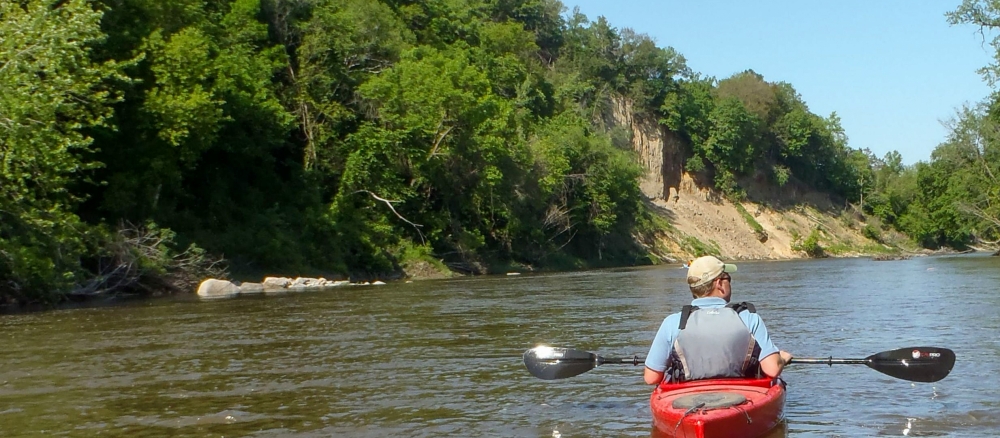
Once covered with hardwood forests and long-grass prairies, the vast majority of the watershed is now planted to crops such as corn and soybeans or used for livestock production. Lakes and wetlands currently comprise 3% of the watershed. About 89% of the wetlands have been drained since European settlement. Many of the lakes are shallow and provide wildlife habitat while others are deeper and popular for recreation. For paddlers, the LeSueur River offers a twisting route from St. Clair through Hungry Hollow and joins the Blue Earth River near the Red Jacket Bridge, which is part of a popular bike trail. This part of the river offers many spectacular cliffs and lots of wildlife.

Water monitoring shows some modest improvements in water quality in the Le Sueur River over the past 10 years, though several sections of the river and its streams continue to suffer from many problems, including turbidity, low dissolved oxygen, and excess nutrients.The Le Sueur watershed is a major source of sediment and nutrients to the Minnesota River. Several agencies and universities have studied the watershed over the past three decades with research continuing. With so much data available for this watershed, agencies and stakeholders can begin targeting work to reduce the pollutants in the Le Sueur eatershed, clearing up the water for local residents and improving water quality downstream all the way to the Mississippi River.

What's being done

The MPCA conducted intensive watershed monitoring in the Le Sueur River Watershed in 2008, with the results showing the location and severity of water quality problems.

The MPCA sampled the fish population in 82 sites in the Le Sueur River watershed in 2008. Researchers found that species tolerant of high turbidity, such as fathead minnows and common carp, dominated the fish population, though game fish were present in 41 percent of the sites. With a reduction in sediment and other pollutants, the rivers and streams in the watershed could support more species that are sensitive to turbidity, such as smallmouth bass and darter species.

Assessing the biology of streams in the watershed is difficult because of the extensive changes in the watershed. To use the land for farming and urban development, land owners have extensively built drainage ditches, installed drainage tile, and straightened streams to move water off the land faster. The MPCA will consider a different type of assessment for these altered streams in the future.

The MPCA will continue intensive monitoring of the streams, studying the entire drainage system, working with stakeholders and other agencies, and drafting a plan to implement changes to restore the river and its tributaries.

For more information about what's being done in the watershed:
PDF Document Le Sueur River Watershed: Partners working to restore southern Minnesota river (wq-i-iw7-29n.pdf)

MPCA's watershed approach: Since 2007, the MPCA and its partners have begun implementing a 10-year rotation for watershed restoration plans to address Minnesota's waters at the major watershed level.

[+] See large map


Watershed News

Is Minnesota's water quality important to you?

If so, take this quick survey. Less than 5 minutes of your time will help us give you the information you want about Minnesota's water quality.

New monitoring report available

In 2008, the MPCA began an intensive watershed monitoring effort of the Le Sueur River watershed's surface waters. For more information on the results of of that effort, read the Le Sueur River Watershed Monitoring and Assessment Report.

Citizens to discuss water quality goals for rivers

Citizens will lead the conversation December 6 at a meeting on water quality goals for the Blue Earth, Minnesota, and Mississippi rivers. This meeting, at the Mankato City Center Hotel, is for farmers, landowners, residents, business owners, fishermen, paddlers, and others interested in the clean-up plans for these rivers. Because a free dinner is being served, RSVPs are required by November 30. For details, go to the Clean Up our River Environment website.

New report outlines sediment budget for Le Sueur River watershed

Holding back water will be key to reducing erosion in the Le Sueur River watershed and improving water quality in many rivers, according to recent research by the National Center for Earth-surface Dynamics. For details, download Integrated Sediment Budget for the Le Sueur River Basin, FInal Report, June 2011 (wq-iw7-29o.pdf).

Improving water quality in the Le Sueur River watershed

Several sections of the Le Sueur River and its contributing streams fail to meet water quality standards. Find out more about efforts in the watershed.

The Faribault County SWCD offers tips on planting rain gardens, maintaining septic systems, and managing manure to improve the water quality of local rivers, including the Le Sueur. Read all about it in the Conservation Connection.

For the latest in information on the Minnesota River Basin, including the Le Sueur River, go to MSU's Water Resources Center website.

Minnesota-Crow Watershed Network News is a periodic, informal e-newsletter for professional staff and others with watershed projects and districts, with a primary focus on the Minnesota River Basin and Crow River.

River Revival

"River Revival" is a 10-part TV series on efforts to improve water quality in the Minnesota River, which means clearing up the waters that feed to it, including the Le Sueur River. To see the Minnesota Bound programs, go to www.youtube.com and search for "Minnesota River Revival."

Assessing erosion risks

Funded by a Clean Water grant, the Blue Earth County SWCD is leading a group of local partners to assess the risks of erosion from ravines, stream banks and bluffs, including several sites along the Le Sueur River. For details, see the project fact sheet.


Restoration and protection

The restoration and protection process

The MPCA and partner organizations evaluate water conditions, establish improvement goals and priorities, and take actions designed to restore or protect water quality on a 10-year cycle.


  Monitoring and assessment

Projects in this watershed to test water quality conditions and determine whether our lakes, rivers, and wetlands are meeting state water quality standards. [More info]

Project Name Status    
Cannon River Watershed Lake & Stream Assessement
Le Sueur River Basin Sediment Study-NCED
Le Sueur River IWM Phase 2
Le Sueur River Maple River Monitor
Le Sueur River Watershed-Maple River Monitoring
Minnesota River Monitoring Program
Minnesota River Sediment Source Research


Data available for this watershed


Lakes and stream segments with condition and monitoring information
Lakes and streams are divided into "assessment units" for monitoring.

Impairments in this watershed listed by lake or stream segment
Generally, a waterbody has an impairment when it exceeds a particular pollutant standard.


  Strategy development projects

Projects in this watershed that establish federal- or state-required plans for restoring water quality for impaired waters, or protecting high-quality waters. [More info]

Project Name Status    
Blue Earth River Basin - Fecal Coliform
Greater Blue Earth Basin Turbidity TMDL
Le Sueur River Major Watershed WRAP Strategy
Lura Lake Excess Nutrients TMDL
Mercury Pollutant Reduction Plan
Minnesota River: Turbidity


  Implementation activities

Projects in this watershed to put water restoration or protection measures in place, ranging from best management practices to reduce runoff from fields or streets, to fixes to wastewater treatment facilities, to education activities for citizens and landowners. Implementation projects are supported by local, state and federal government sources, including Minnesota's new Clean Water Fund.

Our partners in the watershed are continually involved in these kinds of activities. See Contacts tab.

Project Name Status    
Blue Earth River Basin Restoration Alliance
Cobb River Drainage
Conservation Drainage Symposiums
GBERBA Dissolved Oxygen TMDL Application
Greater Blue Earth Basin Stormwater Education
Greater Blue Earth River Watershed BMPs Big Cobb
Lower Maple River Watershed Project
Minnesota River Community Clean-Ups for WQ
Minnesota River Tributary Phosphorus & Flow BMPs


Water data tools

Search for your lake or stream's assessment data
See information about your local lake or stream.


DNR Lake Finder
Find information about 4500+ lakes, rivers, and streams


Search MPCA surface water data
Use this tool for accessing and comparing data in all surface waters.


Contacts

Paul Davis, MPCA project manager

507-344-5246
paul.a.davis@state.mn.us 

Minnesota State University Mankato-Water Resource Center

http://cset.mnsu.edu/wrc/

Blue Earth County Environmental Services

http://www.co.blue-earth.mn.us/dept/environmental.php

Blue Earth County SWCD

http://www.blueearthswcd.org/

Faribault County SWCD

http://www.faribaultcountyswcd.com/

Freeborn County SWCD

http://www.freebornswcd.org/

Freeborn County Environmental Services

http://www.co.freeborn.mn.us/environmental/default.aspx

Waseca County SWCD

http://www.wasecaswcd.org/

Waseca County Planning and Zoning

http://www.co.waseca.mn.us/zoning.htm

Greater Blue Earth River Basin Alliance

http://www.gberba.org/


Maps

Watershed Map

Many of Minnesota’s lakes and streams do not currently meet water-quality standards because of pollution such as excess sediment or nutrients, bacteria or mercury. These waters are considered “impaired.” For more information, visit the impaired waters page.

The toggles show impaired waters and monitoring stations. Click on a site for more information.

Impairments in this watershed, listed by lake or stream segment
Generally, a waterbody has an impairment when it exceeds a particular pollutant standard.


Last modified on April 04, 2012 15:10

additional content