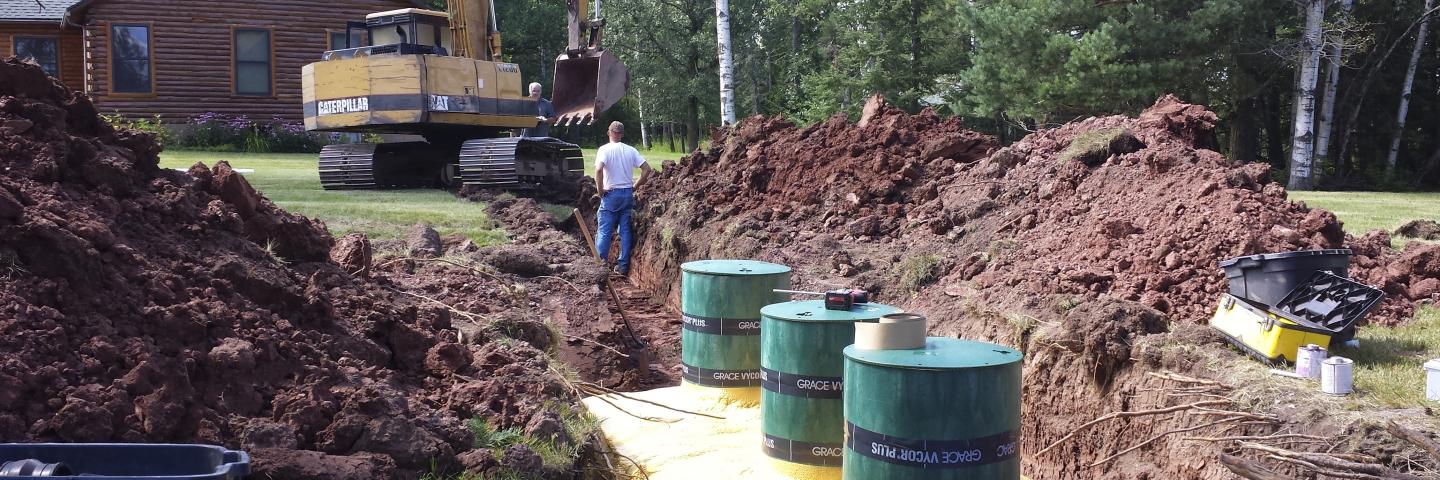
More than 600,000 Minnesota homes and businesses use septic systems, which treat an estimated 45 billion gallons of wastewater per year. MPCA rules govern how septic systems are designed, installed, and managed. The rules are implemented and enforced through local ordinances by counties, cities, and townships.
SSTS licensed business and certified individual search
Local SSTS program administrators can use the SSTS licensed business search to verify licensure. If you are a system owner, recognize that licensed businesses may work anywhere in Minnesota and are not restricted to the city or county in which they are located. The search results are not intended to be used as advertising.

SSTS reference map
This tool is a reference map with many custom layers related to the SSTS industry: wastewater treatment facilities that accept septage, registered tank manufacturers, sand and gravel pit locations, SSTS interests from What’s in My Neighborhood, SSTS Registered Businesses, and more.
SSTS rules and regulations
Local government units can have requirements that are stricter than the minimum state requirements listed here. Always check with your local government first for SSTS requirements.
For earlier versions of the state SSTS rules, visit Minnesota Revisor rule archives.
Current SSTS rules
Effective Sept. 6, 2016.
- Chapter 7080: Individual Subsurface Sewage Treatment Systems (flows up to 5,000 gallons per day [gpd])
- Chapter 7081: Midsized Subsurface Sewage Treatment Systems (flows from 5,001 to 10,000 gpd)
- Chapter 7082: Administrative Requirements of Local SSTS Programs
- Chapter 7083: Certification/Licensing, Product Registration, Advisory Committee
Minnesota statutes governing SSTS rules
- Local ordinance requirements and alternative local standards
- MPCA rule requirements
- Enforcement
- Inspections, complying criteria, disclosure at property transfer
- The $25 septic tank fee
- Licensing requirements for ISTS professionals
- MPCA licensing enforcement
Additional rules and regulations
- Underground Waters MN Rule Chapter 7060
- Shoreland Act and Flood Plain Management MN Rule Chapter 6120
- Wild, Scenic, and Recreational Rivers MN Rule Chapter 6105
- State Plumbing Code MN Rule Chapter 4714
- State Well Code MN Rule Chapter 4725
- Federal requirements for land application 40 CFR part 503
Homeowners
Keep your septic system healthy