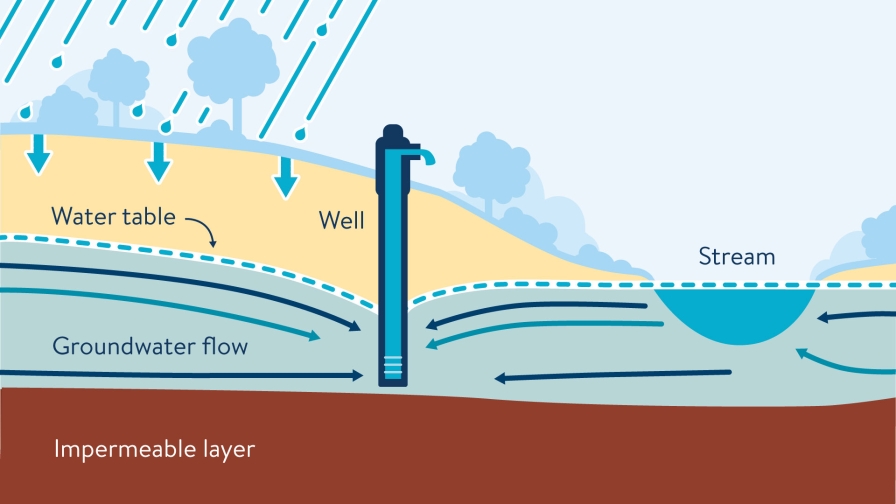
Groundwater is the source of drinking water for about 75% of all Minnesotans and provides almost all of the water used to irrigate crops. Groundwater in parts of the central and southwestern regions of the state is contaminated with high nitrate concentrations from agriculture and, to a lesser extent, failing septic systems. Nitrate levels are higher in groundwater under agricultural land than water below urban areas. Groundwater availability in Minnesota varies by region. It is more difficult to access in the northeast, when it’s available at all, and is scarce in some areas of the southwest.

Your dollars at work
Funding for this initiative comes from the Clean Water Fund, part of the Clean Water, Land and Legacy Amendment that Minnesotans approved in 2008. The MPCA uses Clean Water Fund dollars to protect, enhance, and restore water quality in lakes, rivers, streams, and groundwater.
Overall conditions
- The quality of groundwater varies around the state. Even within an aquifer, the quality can change at different depths. Near-surface groundwater in areas of high urban density or intensive agriculture is more likely to be contaminated by chloride or nitrate.
- The overuse of groundwater threatens surface water quality, and draws contaminated near-surface water into our drinking water aquifers.
Current regulations and voluntary best management practices will not be sufficient to maintain healthy groundwater and shield contaminated wells and aquifers from additional pollution. Even if all existing laws were followed to the letter, groundwater would still be subject to unacceptable levels of nutrients and other contaminants. Targeted action will be required to cut off unregulated sources of pollution.
Northeast Minnesota
Availability issues. Higher volume supplies of groundwater can be difficult to obtain in the northeast, compared to the central part of the state.
Central region
- Availability good. Groundwater is available throughout this region in volumes sufficient to satisfy residential use.
- Nitrate pollution. About 40 percent of the shallow wells (less than 30 feet deep) in the central region have higher nitrate concentrations than the EPA allows for drinking water.
Metro area and the southeast
- Availability issues. Though this region has multiple aquifers, groundwater availability is threatened by high consumption in the Twin Cities metro area.
- Chloride pollution. Groundwater in the Twin Cities metro area shows high concentrations of chloride.
- Nitrate pollution. Most of the sand and gravel aquifers in southern Minnesota have nitrate concentrations that exceed EPA guidelines for human health.
Western and southwestern Minnesota
Nitrate pollution. About 20 percent of the monitored shallow wells in the southwestern region have nitrate concentrations higher than the EPA allows for drinking water.
How groundwater affects surface water
Groundwater contamination and diminishing water levels in the ground can affect bodies of water on the surface. Groundwater feeds surface waters and helps maintain water levels during droughts. If groundwater is being used up and the water level in a stream goes down as a result, the pollutants in the stream will be concentrated, doing greater environmental damage.
The low water levels in Little Rock Creek north of St. Cloud illustrate how groundwater interacts with surface water. Heavy groundwater pumping in the area contributes to low stream flows in the summer, killing off fish. Downstream at Little Rock Lake, low water and excess nutrients cause massive summer algae blooms. The local soil and water conservation district is working with farmers on irrigation management strategies that will use less groundwater.