Product stewardship means that all parties involved in designing, manufacturing, selling, and using a product take responsibility for environmental impacts at every stage of that product's life. The greater the ability of a party to influence the life-cycle impacts of the product, the greater the degree of responsibility the party has for addressing those impacts.
In Minnesota, product stewardship initiatives are keeping millions of pounds of recyclables out of the waste stream. Minnesota adopted the first product stewardship policy in the United States in 1999. The MPCA seeks to develop voluntary commitments with businesses, non-governmental organizations, retailers, and others to increase the collection and recycling of identified consumer products.
Manufacturers that practice product stewardship share in the financial and physical responsibility for collecting and recycling products at the end of their useful lives. When manufacturers share the costs of recycling products, they have an incentive to use recycled materials in new products and design products to be less toxic and easier to recycle, incorporating environmental concerns into the earliest phases of product design.
Product stewardship encourages manufacturers, retailers, and consumers to treat products as resources rather than waste, changing how they think about the products they make, buy, and use.
Solar panels
Minnesota is a leader in renewable energy and also actively working to invest in responsible management of solar panels or photovoltaic (PV) panels at end-of-life. We want to avoid problems associated with dumping or stockpiling discards. While currently more expensive than disposal, solar panel recycling is available in the United States and reclaims valuable and energy-intensive materials and reduces life cycle impacts of new production.
Critical materials recovery
Following the 2024 legislative session, the MPCA was charged with appointing a 15-member critical materials recovery advisory task force to advise the agency throughout 2025 on policy and program opportunities that will increase the recovery of aluminum, cobalt, copper, nickel, silicon, and other critical materials from end-of-life products. The task force will meet at least quarterly and submit a final report with its recommendations by Dec. 30, 2025.
Packaging and paper products
Under Minnesota’s 2024 extended producer responsibility law for packaging and paper products, producers — generally the product brand owner, manufacturer, or importer — must join and pay annual fees into a producer responsibility organization. The producer responsibility organization for packaging and paper products incentivizes sustainable design and reducing the impacts of these materials on the environment and human health.
All packaging and paper products covered by the program must be reusable, recyclable, compostable, or refillable by the consumer by 2032.
Boat wrap
In early 2024, Minnesota became the first U.S. state to establish a boat wrap stewardship program. The law requires boat wrap producers to designate and become members of a stewardship organization and operate under an approved stewardship plan to sell or distribute boat wrap in or into the state. The stewardship organization, on behalf of producers, will promote the program and cover the cost of boat wrap collection, transportation, reuse, recycling, and disposal operations with the goal of collecting and recycling 50 percent of the boat wrap sold in Minnesota by 2030 and 80 percent of the boat wrap sold in Minnesota by 2035.
Electronics
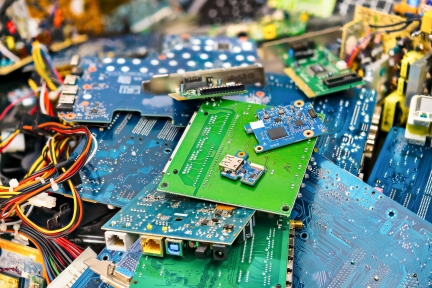
The rapidly growing number of computers, televisions, tablets, and other electronic items being used and discarded means that a substantial quantity of hazardous and toxic materials are entering the waste stream. At the same time, electronic products contain valuable glass, metals, and plastics that can be used to make new products. Both needs can be met with electronics collection and recycling initiatives.
Minnesota banned the disposal of electronic products containing a cathode-ray tube (CRT) in mixed municipal solid waste in 2006. Manufacturers of "video display devices" must annually register and pay a registration fee to the state, collect and recycle specific consumer electronic devices from Minnesota households, and file a report detailing the results of their collections and recycling for each program year.
Paint
In Minnesota, paint manufacturers must work to reduce paint waste, promote paint reuse and recycling, and provide for the collection, transport, and processing of paint for recycling and reuse. The work is being done by PaintCare, a nonprofit organization established by the American Coatings Association to fulfill state mandates. No architectural paint may be offered for sale in Minnesota unless the paint’s producer participates in an approved stewardship plan.
Minnesota has an established network of county household hazardous waste programs that collect paint from residents. PaintCare supports those programs and provides additional collection sites at retail locations.
- PaintCare: Minnesota Architectural Paint Stewardship Program Plan
- PaintCare in Minnesota
- Household hazardous waste collection
PaintCare submits an annual report to the MPCA describing the methods used to manage paint, the weight of all paint collected, samples of educational materials, an independent financial audit, and more.
Rechargeable batteries
Minnesota prohibits disposal of rechargeable batteries and products with nonremovable rechargeable batteries with everyday trash. In order to sell rechargeable batteries in the state, the rechargeable battery industry had to implement a state-approved collection program. In addition, rechargeable batteries and rechargeable products that don't meet the collection requirements can't be sold in Minnesota. Manufacturers can meet the requirements for collection by becoming a licensee of The Battery Network (formerly Call2Recycle).
Compact fluorescent lights
Compact fluorescent lights (CFLs) contain mercury, which makes their safe disposal an important issue for both public health and the environment. Minnesota has banned all fluorescent lamps from trash; they must be recycled. The state also requires utilities with 200,000 or more customers to collect fluorescent bulbs for recycling. Three U.S. states have enacted product stewardship laws for household fluorescent lamps.
Telephone directories
Telephone directories were banned from disposal in municipal solid waste in Minnesota in 1992. Publishers of telephone directories had to provide for collection and delivery of the directories to a recycler and inform recipients of the collection system.