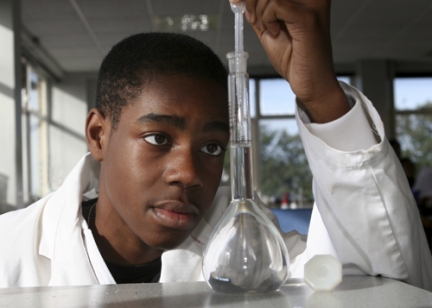
Green and safer product chemistry is formulating or designing a new product (or reformulating an existing one) to reduce harmful environmental, workplace, human health, and energy use effects over the product's entire life cycle. A product's life cycle includes design and manufacture, sourcing and production of material and energy inputs, end use, end-of-life recovery, and all packaging and transportation between these steps.
Product chemistry should take into account green and sustainable chemistry and green engineering principles, which include preventive approaches, designing out toxicological effects (including at the molecular level), energy and water consumption during production and use, and recyclability.
- 12 principles of green chemistry (American Chemical Society)
- 12 principles of green engineering (American Chemical Society)
- Green chemistry (U.S. EPA)
Green chemistry and design represents a high-level commitment to pollution prevention. It's more common for product makers to reduce pollution in the manufacturing process than to redesign the products themselves. But the product design stage is critical to reducing a product's environmental impact.
From products to the environment
Some 90% of the products we use contain one or more chemicals, such as paints, dyes, fragrances, lubricants, germ-killers, preservatives, cleaners, adhesives, solvents, water and stain repellents, or flame retardants. Many of these find their way into our environment and our bodies, where they can disrupt ecosystems and health. Learn more:
- Toxic Free Kids Act: Chemicals of high concern and priority chemicals (MN Dept. of Health)
Through the Chemicals in Products Interagency Team, the MPCA partners with the Minnesota Departments of Commerce and Health to:
- monitor chemical hazards in products and the environment
- educate residents and businesses about chemical hazards and how to avoid them
- accelerate the development and use of safer alternatives

Environmental Assistance loans
The MPCA offers environmental assistance loans to provide financial assistance for the capital costs (machinery and equipment) needed to implement green chemistry and design improvements. Loans are available either in partnership with private financial institutions or direct, zero-interest loans for smaller projects.
Green and safer product chemistry grants
Summer internships
The MPCA has merged its program offering summer internship grants to Minnesota businesses that advance green chemistry and engineering practices with the Minnesota Technical Assistance Program (MnTAP) summer internships program.
MnTAP’s internship program works with organizations focused on manufacturing process improvement and the reduction of solid and hazardous waste, wastewater discharges, air emissions, and use of water and energy. The merged programs will retain the MPCA’s basic goals of supporting sustainable chemistry in products or the processes used to make products.
Interns are often junior or senior undergraduates in chemistry, engineering, or related technical fields. They commit to about 500 hours at the host company over the summer months. MnTAP or MPCA funds underwrite most of the host’s labor cost.
Grants from the merged program can support interns working on a variety of projects, including:
- development and performance testing of alternative materials or formulations
- assessment of the life-cycle safety and supply of alternative materials in products or manufacturing processes
- upstream investigation to find the source of undisclosed toxic chemicals, whether in manufacturing supply chains or in wastewater treatment systems
For more information on the internship program and details about potential hosts and candidates can take part, visit MnTAP’s internship page: http://www.mntap.umn.edu/interns/business/.
College curriculum grants
The MPCA occasionally offers grants for development of green chemistry and design curricula at post-secondary institutions in Minnesota. The grants also help strengthen Minnesota and national networks of post-secondary faculty teaching green chemistry principles.
Augsburg University used a $14,000 MPCA green chemistry curriculum grant to introduce new course materials and resources for students to learn about green polymer synthesis and design. The same project also helped create a new green chemistry and toxicology course for chemistry and biochemistry majors.
Macalester College incorporated a "do it yourself" dye-sensitized solar cell lab into its Chemistry of Solar Energy course, which introduced students to concepts of chemistry as they apply to solar energy. The course also introduced the principles and practices of green chemistry as applied to synthesis and manufacture of photovoltaic systems. The incorporation of a lab into this upper-level elective was an opportunity for students to practice hands-on green chemistry and to see the results of their labor as a functional solar cell device.
St. Catherine University used grant funds to develop "green extraction" of lipids from egg albumin for use in biochemistry labs. A common biochemistry laboratory that investigates lipids calls for the extraction of lipids from food sources such as eggs, soy, and avocado. Methods for extracting lipids from food require chloroform, generating close to 5 liters of chloroform waste per semester. The greener alternative lab incorporates more process-oriented learning and reduces the amount of solvent by 90% while incorporating more critical reasoning and problem-solving skills. MPCA funding has made it possible to implement this lab by providing funding for supplies and funding one student teaching assistant to do the testing and development of the course with the faculty member.

Resources
- Contaminants of emerging concern (MN Dept. of Health)
- Minnesota biomonitoring: Chemicals in people (MN Dept. of Health)
- National report on human exposure to environmental chemicals (CDC)
- Safer Chemistry Training for Businesses (Green Chemistry and Commerce Council)
- Regulated chemical information (CAS)