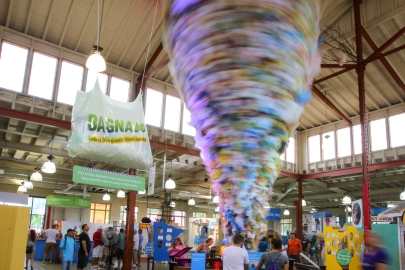
An exhibit at the Minnesota State Fair


How can you make a difference for Minnesota’s environment?
There are so many ways. The Eco Experience brings together organizations, ideas, and hands-on activities to show what you can do at home to help the environment. The annual event is open during the 12 days of the Minnesota State Fair. The 2012 Minnesota State Fair is August 23-September 3. See you there!
2012 daily themes
Learn about these topics in our exhibits, at the Sustainability Stage, and through special promotions. Expand the boxes below to read about the featured topic for each day.
August 23 — Go green to save green $
Going green doesn’t have to be expensive. Easy projects and simple choices can be good for the environment and save you money too. You can learn about these choices at the Eco Experience:
- Upgrade your fixtures and equipment. Heating accounts for the vast majority of energy use of Minnesota families. If your current furnace is more than 20 years old, it’s time to upgrade to an efficient unit. Information is available in the green building exhibit.
- Think reused. Reused items cost less and produce less waste than new items. Talk to experts in the reduce, reuse, recycle exhibit.
- Drive alone less often. AAA estimates it cost roughly $8,800 per year to own and operate an average car in 2011 (and that’s with gas at $2.88 per gallon!). Save money on fuel and maintenance costs when you drive less often. Grab a carpool buddy, walk to places less than a mile away, ride the bus or train, or try biking. Resources for all these options are available in the transportation exhibit..
August 24 — Volunteering for the environment
Minnesota ranks 3rd among the 50 states in the number of residents who volunteer. Many of our 1.5 Million volunteers are helping the environment. The Sustainability Stage will feature residents who are volunteering in their communities. We will also present opportunities to get involved, including the MPCA’s citizen lake or stream monitor program.
August 25 — Recycled fashion
A recent study from the Netherlands found creating one t-shirt uses half a day's worth of household electricity and three times that much to wash, dry, and iron the shirt over its lifetime. On August 25 we will share creative ways to reduce the amount of new clothing you buy, without compromising fashion.
Check out the Sustainability Stage for presentations on up-cycling, reusing, repairing, and cleaning your clothes. Visit the Reduce, Reuse, Recycle exhibit for an exhibit about sustainable shopping.
August 26 — ENERGY STAR efficient products and practices
Making your home more energy efficient with ENERGY STAR can help reduce high energy bills, improve comfort and protect the environment.
Minnesotans use an average of 9,600 kWh of electricity and 550 therms of natural gas to operate their homes. At current prices, this is about $1,600 per year. The typical Minnesota homeowner could reduce energy use by up to 40 percent (!) through a combination of conservation and efficiency measures.
You’ll find tons of resources for energy efficiency in the Energy Solutions Home, including these topics:
- Energy audits. The best way to start saving energy is to know your present energy use and opportunities to reduce energy use. An advanced energy audit, available from your utility company or private energy auditor, can provide you a detailed report and solutions for your energy problems. See how several audit tools (including a blower door and an infrared camera) can show areas where energy — and money — can be saved.
- Lighting. Compare bulbs and learn how to choose a bulb based on brightness, color, and function.
- Appliances, heating, and cooling. ENERGY STAR appliances use less energy. See examples of energy efficient appliances, furnaces, air conditioners, and water heaters.
August 27 — WaterSense water-efficient products and services
WaterSense labeled products and services are certified to be at least 20 percent more efficient, without sacrificing performance, so consumers save natural resources, reduce water consumption, and save money.
Learn about water-efficiency in the Energy Solutions Home. The display showcases the latest in lo-flow fixtures, faucets, and showerheads, plus information on how to identify and correct toilet leaks. You can get free toilet tank leak-detection tablets, too.
August 28 — Clean water choices
Explore the science of water in our exhibit. You can look at water bugs up close, play with a miniature stream, and try out a secchi disk, a tool used to measure water clarity. There is so much to learn about water!
The Minnesota Pollution Control Agency regulates sources of pollution draining directly into our lakes and rivers, but there are many indirect sources of water pollution, like runoff from lawns and driveways. At the Eco Experience you can also get landscaping ideas that help rainwater soak into the ground instead of running into storm sewers. These ideas include permeable pavers, rain gardens and native plants.
August 29 — Burn Wise to protect your home, health, and the air we breathe
Most air pollution comes from every-day activities; not factories or power plants. This includes burning wood. On Burn Wise day, the Sustainability Stage will feature speakers focused on the air pollutants generated when wood is burned, the health effects of wood smoke, and how to burn wood efficiently. Come to the 1 p.m .show on the stage on August 29 to enter a drawing to win a free wood moisture meter!
Burn Wise is a partnership program of the U.S. Environmental Protection Agency that emphasizes the importance of burning the right wood, the right way, in the right wood-burning appliance to protect your home, health, and the air we breathe. The Eco Experience will feature Burn Wise information, including a wood shed for drying wood (free plans and material list!) and a wood moisture meter (try it out!).
August 30 — The dirt on compost
Composting is an easy way to reduce waste while improving your yard and garden soils. By composting leaves with kitchen scraps, you create a dark, crumbly mixture that can be used to improve the soil and reduce your use of fertilizer and water.
The Eco Experience includes a large display on composting, with several bins and experts to answer your questions. There is a full line-up of Sustainability Stage presentations to give you “the real dirt on compost.”
August 31 — Kick ga$ and find more ways to move
AAA estimates it costs roughly $8,800 per year to own and operate an average car in 2011 (and that’s with gas at $2.88 per gallon!). Save money on fuel and maintenance costs when you drive less often.
Every day from noon to 4 p.m. there are basic bicycle maintenance demonstrations by local bike shops. The Sustainability Stage features diverse presentations on biking, vehicles, and transit.
September 2 — Grow green landscaping
Landscapes are an important part of a sustainable community. They impact the way we live, the energy we use, and the value of our property. If you have a patch of land that you care for, check out the following features of the 2012 Eco Experience:
- A living wall. See how a vertical green wall can be used to benefit the environment and add beautiful textures and colors to the landscape.
- Water capture and reuse. Potable water is valuable and scarce. Use less potable water for landscape purposes by capturing rain water and reusing it.
- Plantings for Pollinators – A garden designed with plants for pollinators and butterflies. Pollinators are important to both our natural ecosystems as well as our agricultural areas.
- Food Crops – A garden designed with food crops integrated into plantings – including architecturally interesting potato towers made of cedar and metal.
- Permeable Pavers – A cross section of a permeable surface is on display, with a description of what happens to rain water when it falls on a this type of surface.
- Low-input lawn and yard – Find new ways to care for your yard in an energy efficient way, including battery operated lawn mower and pruning equipment, natural fertilizer, and weed control options.
September 3 — Waste not, want not and help the environment
Conservation—of energy, water, and materials—is at the heart of the Eco Experience. Conservation is sometimes hard to see, but it makes a HUGE difference. For example, when you avoid making garbage in the first place, you don't have to worry about disposing of waste or recycling it later. When you fix a toilet leak, you stop sending clean, drinkable water “down the toilet.” We have several displays about wasting less including:
- Energy: home improvements, appliances, lighting, and heating.
- Water: low-flow fixtures and finding leaks.
- Waste: reuse ideas and eco-shopping.
Did you stop by last year? Look for the organizations and products you saw on the Green Crossing and Partners pages.
If you are an organization interested in participating in the Eco Experience, please contact Britt Gangeness at 651-757-2262.