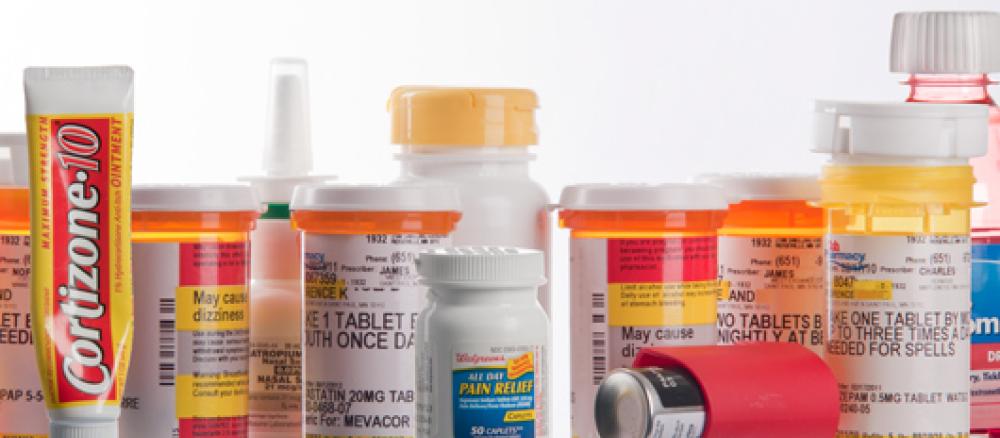
Doing some spring cleaning and clearing out your medicine cabinet? Stop before you flush old or unwanted prescription or over-the-counter medications down the toilet or drain. These pharmaceuticals can pollute our water and unintentionally expose us to the chemicals in these medications.
Studies have found that medicines flushed down the drain can contaminate our lakes and streams, which can hurt fish and other aquatic wildlife, and end up in our drinking water. Some medications, such as hormones and antidepressants, include endocrine disrupting compounds that interfere with the reproduction and normal growth of many aquatic species, such as frogs and fish.
MPCA and University of Minnesota researchers have also detected antibiotics commonly used in healthcare and animal health at low levels in lakes, rivers, and streams throughout Minnesota, and the U.S. Geological Survey has found antibiotics in groundwater in non-agricultural and urban areas. Bacteria in the presence of an antibiotic will try to change to survive. These changes can lead to antibiotic resistance — the ability of bacteria to withstand antibiotic effects.
In addition to the environmental impacts, prescription drugs in home cabinets are a significant cause of accidental poisoning. These drugs are also highly susceptible to misuse and abuse. Studies show that people who abuse prescription drugs often obtained them from family and friends, including from the home medicine cabinet.
When medications are flushed down a toilet or drain, they enter the wastewater treatment system, which cleans up the water. Unfortunately, many of these treatments systems are not designed to remove medications.
Disposing of medications
Don’t flush old or unwanted prescriptions or over-the-counter medications down the toilet or drain and don’t put them in the trash.
There are more than 300 medication collection boxes located at law enforcement facilities and pharmacies in Minnesota. These collection sites do not charge any disposal fees. Collection sites accept all medicines from households, including prescription, over-the-counter, liquid, solid, and pet medicines.

Medication drop-off sites
Use this interactive map to find licensed locations collecting unwanted prescription drugs and medications in your area.
When using a collection site
Collection sites have different lists of what they accept. Always check with the collection site for any restrictions.
- You cannot retrieve an item once you placed it in a drop box.
- Keep prescription medications in their original container. Remove patient information and prescription numbers.
- DEA regulations prohibit placing illicit drugs (cocaine, heroin) or business-generated medications in a bin.
- Chemotherapy drugs in capsule form may be taken to a collection site in the original container. Liquid chemotherapy drugs should be returned to the clinic that issued them due to the potential to expose collectors and the public to cytotoxic drugs.
- Unused needles with syringes that still contain medication may be put in medication collection boxes if they are first placed in a puncture-proof container. Used needles are not accepted at medication collection sites. Contact your county solid waste office to find out whether there is a collection option for used needles. Never place containers with used needles or syringes in a recycling bin or loose sharps in the garbage.
- Mercury-containing devices cannot be safely incinerated, so do not bring mercury thermometers or other devices to medication collection boxes. Mercury is a potent neurotoxin. Take mercury-containing products to your county household hazardous waste collection facility.
When a collection site isn't available
Many pharmacies sell envelopes that you can fill and mail. The companies that sell these envelopes will incinerate the medications. Follow the directions on the envelopes.
Incineration at a permitted waste-to-energy facility is the best method for destruction of household pharmaceuticals. If you know your garbage goes to an incinerator, you can safely dispose of your medications using the instructions below.
- Keep prescription medications in their original containers. Cover the patient's name and prescription number with permanent marker. Over-the-counter medications may be placed in a grocery or other non-transparent bag and placed in the garbage.
- Modify the contents of prescription medications to discourage anyone from taking them. For pills or capsules, add vinegar to the container to dissolve them. Add table salt or flour to liquids.
- Seal and conceal prescription medication containers. Tape the lid shut with duct tape and place the container inside an opaque piece of trash, such as an empty margarine tub. For blister packs, wrap packages containing pills in opaque tape like duct tape.
- Throw the container in the garbage.