Lead is toxic
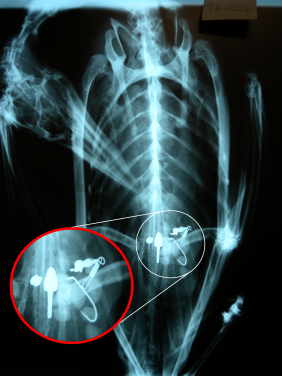
The current national estimate is 25% of adult common loon deaths are due to lead poisoning after ingesting lead fishing tackle.
Once sickened with lead poisoning, loons suffer a slow and painful death. Lead also poisons raptors, swans, and some mammals.
How lead tackle ends up inside a loon
- Loons eat a fish with ingested or attached tackle.
- Loons grab your bait or fish from your fishing line.
- They scoop up lead sinkers at the bottom of lake when gathering pebbles to aid in their digestion.
How to know if your tackle is lead
The packaging will have a lead warning on it. If you no longer have the packaging, here are tips that may help.
- The reality is that most fishing tackle with any density to it, especially older tackle, contains lead, based on current and historic trends in the tackle industry.
- Lead is a dense but soft metal that is easy to mold and shape. Using pliers is a good way to test this out.
- Lead is gray and dull. It will leave a gray mark if you scratch it on paper. If there is paint, it will still be able to leave a gray mark after the paint layer is scratched.
Lead-free alternatives
Anglers can choose lead-free materials when shopping for fishing tackle. Popular options include tungsten, steel, tin, bismuth/tin, and glass. Lead-free alternatives are also effective. In the case of tungsten, it performs much better than lead because it sinks faster, is denser, and more sensitive.
What you can do
- Buy and use lead-free fishing tackle. Find lead-free fishing tackle in our manufacturer's directory.
- Properly recycle unwanted lead tackle at your county household hazardous waste facility. Reach out to your county household hazardous waste facility for more information.
- Spread the word. Tell your friends about the problem. Encourage them to switch to lead-free tackle.
- Ask your favorite retailers to stock lead-free fishing tackle.
- Lead is toxic to humans, especially children. Be cautious when handling and using lead tackle to minimize exposure from lead and lead dusts. Wash your hands and avoid putting lead tackle in your mouth.
Ways to get involved
- Partner with us to host a tackle collection in your community.
- Invite us to present at a school or community organization.
- Follow Get the Lead Out on Facebook and Instagram.
- Use our fact sheet to spread the message to others:

Retail rebate program
The Get the Lead Out lead-free fishing tackle rebate program offers rebates for Minnesota retail establishments that stock tungsten and other non-toxic alternatives to lead tackle.
About our program
Education and outreach initiatives are funded by the Minnesota Environment and Natural Resources Trust Fund as recommended by the Legislative-Citizen Commission on Minnesota Resources (LCCMR).