http://www.pca.state.mn.us/

tinyURL : bkzq42 | ID : 2201Home   >   About MPCA   >   Training

main content

Summer Turf Grass Maintenance Program


Training Program Overview

Minnesota turf logoThis training program focuses on the implementation of Best Management Practices for Lawn/Turf Care Maintenance. Similar to the Road Salt training in Minnesota, this summer maintenance training is about 4 hours in length, including a test to reinforce learning. The training will also include a voluntary commitment option to implement the Best Management Practices taught in the training. A voluntary certification will be issued by the Minnesota Pollution Control Agency to participants who:

  1. take the training;
  2. pass the test; and
  3. voluntarily commit to implement the Best Management Practices.

The following topics will be covered in the summer turf maintenance workshop:

  • How does turf management affect local lakes and rivers
  • Equipment calibration
  • Selection and application of fertilizers
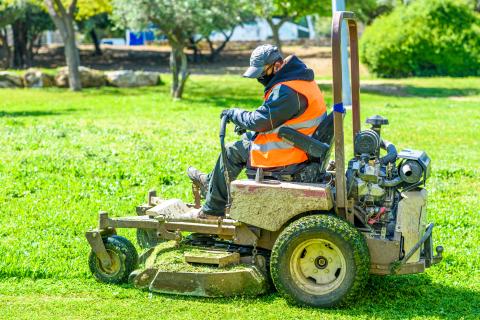
  • Mowing techniques
  • Pesticide application tips
  • Best Practices for Turf Management
  • Legal issues and additional resources

You will also walk away with helpful in-the-field materials you can use, such as a turf care matrix.

Funding for the Summer Turf Grass Training events in Minnesota are made possible through a 319 education grant and partnerships with local watersheds and government organizations.

Pilot Overview

The Mississippi Watershed Management Organization (MWMO) hired Fortin Consulting, Inc. (FCI) to test and refine a MPCA approved training and voluntary certification course to reduce environmental impacts of summer maintenance.  The course was developed with previous funding from the MWMO and the assistance of a technical expert committee. Three training trials were held in July 2009.  Locations were St. Paul, Farmington and St. Anthony.

Training Trials:

The three classes were held on July 7, 15 and 22. Over the 3 trial classes, 87 people attended training and passed the voluntary certification exam.  Our target numbers for the trials were 60-90 people total. There was a variety of companies, agencies and local governments represented, including, cities, private companies, master gardeners, water resources staff, a property management company, schools and more.

After each course, evaluations were tabulated to get feedback to improve the course for the next trial and were sent to the instructors.  After each course the instructors and other technical expert members met to discuss the training and how to improve it for the next round.  Changes were made between each training course.  The final course was extended by 1 hour to accommodate the amount of material and class exercises that were deemed important. 
Evaluations from each course were tabulated, and the BMP exercise summary which was added to class 3 is attached.  High ratings were given to the course even though it was still in the development/trial mode.  When asked “will recommend this class to others” the percentages changed per class but were all quite high with 93%, 86% and 100% from first to last trial course.  The Best Management Practice (BMP) exercise showed a high potential to protect water quality.

Follow-up Interviews:

Follow-up interviews of 15 participants in the three Summer Maintenance Training Trial Classes were conducted in August and September of 2009.
 
Because all three trainings were presented in July 2009, the interviewees have only had one to two months to change their practices. Already, many of those interviewed had raised their mower heights. At least two agreed that their turf looks its best.  Several of the respondents now frequently check their irrigation systems and sharpen their mower blades more often.  One garage has already bought an aerator and is using it for the fall.  Each hopes to do more in the years to come.  A property manager that attended the first training session has made several changes for all of the sites she manages.

Most of those interviewed have been in this field of work for many years.  Some of them even had a horticulture or forestry degree.  Because of their vast experience, they were already aware of much of the topics discussed in class. For many of them it was review.  However, they all agreed that it is great review, and it is especially important for newcomers in the field to attend and learn.

Even as experienced as the interviewees are, though, many of them were still surprised by some of the information.  They were impacted by the environmental component of their work.  Several of them were amazed by the water quality degradation that summer maintenance contributes to our water bodies.  One of the respondents plans to prioritize his work areas and only give more attention to high priority areas.  A few of them said that they will do more spot spraying of herbicides and fertilizers.

Several of them liked to hear the benefits and drawbacks of each practice, so that they weren't just being told what to do, but why to do it that way.

Who Should Participate?

  • Contractors maintaining private/public grounds
  • Employees maintaining park, cemetery, city and/or school grounds
  • Property managers writing contracts
  • Distributors of turf care products

Why Is It Important?

This class will help:

  • Save you money
  • Protect our water
  • Get you CERTIFIED

GET CERTIFIED! Minnesota Pollution Control Agency Level 1 Certification: Summer Turf Care Best Practices testing will offered at the end of this workshop.

Class Instructors will include:

  • An environmental specialist
  • An academic turf expert; and
  • A field expert.

List of Individuals Certified

A voluntary cerfification was given to individuals who:

  1. Attended voluntary training;
  2. Completed and passed the associated test; and
  3. Agreed to Voluntarily Apply Best Management Practices to Reduce Turf Grass Maintenance Environmental Impacts

The list of individuals given this voluntary certification to date is contained in the following document:

Training Schedule

The following training schedule is changed periodically as training events are completed/added:

Turf Grass Maintenance Manual and Matrix Charts

The following is the Turf Grass Maintenance manual and will be posted on this web page when it's available.

Development Team and Contact Information

The training was developed under the leadership the Mississippi Watershed Management Organization and Fortin Consulting, with the input and assistance from the following list of development team participants:

Summer Maintenance Expert Team:

  • Gary Chamberlain, TruGreen - Regional Technical Manager
  • Bob Dahm, Organic Bob, LLC
  • Brad Fortin, City of White Bear Lake - Park Maintenance
  • Heidi Heiland , MNLA Rep, Heidi’s Lifestyle Gardens - Gardens/plantings
  • Jeff Jensen, MNLA Rep, Tessman Company - Chemicals, fertilizers, seed
  • Bob Mugaas, University of Minnesota Extension - Turf
  • Brady Panitzke, City of St. Anthony - Parks
  • Jonathan Rabe, Minneapolis Park Board
  • Kathleen Schaefer, Mn/DOT/CTAP - Public works training
  • Tom Sullivan, City of St. Anthony - Parks
  • Brad Tabke, MNLA Rep - Quercus Landscapes, Inc
  • Mark Tierney, Wayzata Schools - Grounds Maintenance
  • Jim Weber, University of Minnesota - Grounds Maintenance

Project Sponsors:

  • Denise Leezer, MPCA - Metro Area Basin Coordinator
  • Kari Oquist, Mississippi Watershed Management Organization - Water Resources Manager
  • Andrew Ronchak, MPCA - Environment Certification
  • Jenny Winkelman, Mississippi Watershed Management Organization - Education & Outreach

Project Managers:

  • Carolyn Dindorf, Fortin Consulting, Inc - Environment Water Quality
  • Connie Fortin, Fortin Consulting - Environment Project Management

For course content questions: Connie Fortin 763-478-3606
connie@fortinconsulting.com
For registration questions: Contact the above listed people.

For additional information regarding this program contact:
Andrew Ronchak
651-558-6157
andrew.ronchak@state.mn.us

Last modified on April 03, 2012 08:32